









Explore the most comprehensive database
1 000 000
bonds
100 000
stocks
175 910
ETF & Funds
100 000
indices
Track your portfolio in the most efficient way

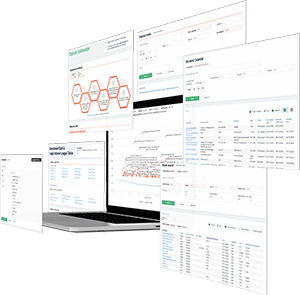
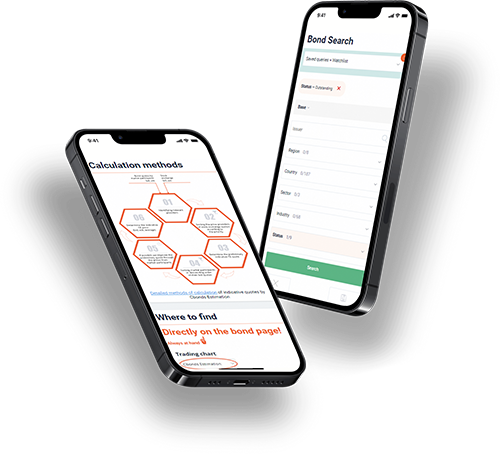
full data on over 1 000 000 bonds, 100 000 stocks, 100 000 indices, 17 000 ETF and 150 000 Mutual Funds; powerful bond screener; over 350 pricing sources among stock exchanges & OTC market; ratings & financial reports; user-friendly interface; available anywhere via Website, Excel Add-in and Mobile app.
Register


Short videos that will help you quickly get used to and start using the service.


US Treasury bonds represent the cornerstone of the global fixed income market. Backed by the full faith and credit of the U.S. government, they are widely regarded as the benchmark risk-free asset, forming the foundational layer of institutional portfolios across the globe.
Their strategic role extends far beyond capital preservation. Treasuries serve as essential instruments for duration management, risk calibration, and macro positioning. In multi-asset strategies, they provide negative or low correlation with equities during periods of market stress, making them a key component for diversification and capital protection.
From a market structure perspective, the U.S. Treasury market is the most liquid and transparent sovereign debt market in the world. Daily trading volumes regularly exceed hundreds of billions of dollars, supported by a deep primary dealer system, electronic trading platforms, and a robust repo infrastructure. This unparalleled depth ensures reliable execution even in volatile conditions, making Treasuries the preferred vehicle for liquidity reserves and tactical rebalancing.
In addition, US Treasuries underpin critical financial system functions. They anchor global risk-free rate benchmarks, serve as the primary collateral in repo and derivatives markets, and act as a reference asset for credit spread valuation and regulatory capital frameworks. From central banks to pension funds and hedge funds, Treasuries remain indispensable tools for benchmarking, risk-free rate estimation, and collateral optimization.
In summary, US Treasuries are not merely debt instruments – they are systemic enablers of stability, liquidity, and transparency across the global financial architecture.
T-Bills are short-term zero-coupon securities issued with maturities ranging from 4 to 52 weeks. They are sold at a discount to par and redeemed at face value, with the yield realized through the difference. Due to their minimal interest rate risk and high liquidity, T-Bills are widely used by institutional investors for cash management, short-term capital allocation, and collateral optimization. Their status as the most risk-free asset class makes them ideal instruments for liquidity buffers and regulatory liquidity coverage ratios (LCR).
T-Notes have maturities between 2 and 10 years and offer semiannual fixed coupon payments. They form the backbone of the intermediate section of the yield curve, with 2-year, 5-year, and 10-year benchmarks serving as pricing references for a wide array of financial instruments. Their relative sensitivity to changes in interest rate expectations makes them key instruments for duration strategies, curve positioning, and macroeconomic outlook trades.
T-Bonds are long-duration instruments with maturities typically at 20 and 30 years. With higher duration exposure, they are used extensively by institutional investors engaged in asset-liability management, particularly pension funds and life insurers. T-Bonds provide a means of locking in long-term risk-free rates and serve as hedging tools for long-dated liabilities, macroeconomic tail risks, and convexity overlays.
TIPS are U.S. government securities designed to protect against inflation by adjusting principal according to changes in the Consumer Price Index (CPI). They pay a fixed real coupon on the inflation-adjusted principal, making them instruments providing real yield exposure. TIPS are particularly suited for mandates requiring preservation of purchasing power and are often held in real-return or liability-aware strategies.
FRNs are two-year instruments whose coupons are paid quarterly, with coupon rates being reset weekly based on the prevailing yield of 13-week Treasury bills. They offer a floating-rate exposure to short-term interest rates and are used to manage duration in rising rate environments. FRNs provide institutional investors with a tool for yield enhancement without extending duration, and are often incorporated in front-end strategies or liquidity ladders.
The composition of Treasury buyers is traditionally represented by following institutions:
This diversified demand base underpins market stability, but shifting flows – especially from central banks – warrant close monitoring due to their potential impact on long-end pricing and auction dynamics.
US Treasuries have historically demonstrated low or negative correlation with risk assets, particularly equities, during periods of market stress. In crisis episodes such as 2008, 2020, and periods of heightened market volatility, Treasuries provided positive returns and capital preservation while equity markets experienced drawdowns. This countercyclical behavior reinforces their role as a volatility dampener and core diversifier within multi-asset portfolios.
Treasuries serve as the foundational pricing benchmark across asset classes. They are integral to discounting cash flows, constructing risk-free yield curves, calibrating relative value spreads, and building sovereign and corporate curves. For institutional investors managing performance versus benchmarks, U.S. Treasury securities represent the baseline from which risk premia and excess returns are derived.
In the context of liability-driven strategies, Treasuries are critical instruments for hedging long-dated obligations. Pension funds and insurers use long-duration nominal bonds and TIPS to match liability cash flows, control interest rate sensitivity, and immunize future outflows. The depth and granularity of the Treasury curve enable precision in LDI structuring and risk transfer.
Beyond investment use, Treasuries underpin systemic financial infrastructure. They are the primary form of high-quality collateral in repo markets, central clearing, and derivatives margining. Their pristine credit quality and market depth make them indispensable in liquidity coverage frameworks and regulatory capital regimes (e.g., Basel III, LCR, HQLA classification).
For asset managers, Treasuries offer efficient exposure to interest rate duration, optionality in tactical allocation, and a resilient foundation during periods of heightened risk aversion.
Treasuries are sensitive to changes in interest rates, with price volatility increasing proportionally to duration. In rising rate environments, long-duration securities such as 10- and 30-year Treasuries can experience substantial mark-to-market losses. The tightening cycles by the Federal Reserve highlight this risk, as bond prices decline sharply amid aggressive policy normalization. The duration exposure is generally managed by employing active strategies such as barbell allocations, interest rate derivatives, or tilt toward shorter-dated instruments.
Nominal Treasuries are exposed to inflation erosion, especially during unanticipated spikes in CPI. Rising inflation diminishes the real value of fixed coupon payments and principal, leading to reduced purchasing power for investors. The surge in U.S. inflation post-2021 underscored this vulnerability. TIPS offer a direct hedge against such risks by indexing principal to inflation, but they may offer lower nominal returns and limited secondary market liquidity relative to nominal bonds.
While U.S. Treasuries are considered default-risk-free, they are not entirely immune to reputational and political risks. Credit rating agencies have downgraded the U.S. sovereign rating (S&P in 2011, Fitch in 2023) due to recurring political standoffs over the debt ceiling and long-term fiscal sustainability. Although these events have not led to actual payment defaults, they introduce market volatility and auction uncertainty, which calls for paying attention to debt limit negotiations, fiscal policy developments, and sovereign rating outlooks.
Despite these risks, Treasuries continue to be viewed as the most secure and liquid government securities globally. However, in constructing resilient fixed income portfolios, institutions must account for duration, inflation linkage, and potential tail events embedded in U.S. fiscal dynamics.







 Bond Screener