









Explore the most comprehensive database
1 000 000
bonds
100 000
stocks
175 910
ETF & Funds
100 000
indices
Track your portfolio in the most efficient way

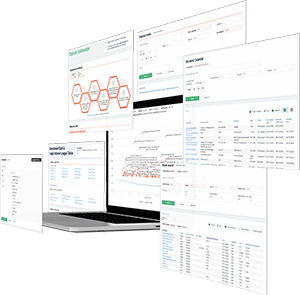

full data on over 1 000 000 bonds, 100 000 stocks, 100 000 indices, 17 000 ETF and 150 000 Mutual Funds; powerful bond screener; over 350 pricing sources among stock exchanges & OTC market; ratings & financial reports; user-friendly interface; available anywhere via Website, Excel Add-in and Mobile app.
Register


Short videos that will help you quickly get used to and start using the service.


International USD sovereign bonds are debt securities issued by national governments in U.S. dollars and placed in international capital markets. They represent a contractual obligation to repay principal and interest in hard currency and are typically governed by foreign law, most commonly New York or English law. These features distinguish them from domestic sovereign bonds, which are issued in local currency and governed by domestic legislation.
The defining characteristic of USD sovereign bonds is their denomination in the world’s primary reserve currency. For investors, this structure eliminates local currency risk and provides exposure to sovereign credit through a familiar and globally traded instrument. For issuers, however, USD borrowing introduces a currency mismatch: debt service must be met in dollars, requiring sufficient foreign exchange reserves, export revenues, or access to external funding. As a result, USD sovereign bonds embed a different risk profile than local-currency debt, even when issued by the same government.
International USD issuance is most common among emerging and frontier market sovereigns seeking access to deeper pools of global liquidity, as their domestic markets often lack sufficient depth and long-term demand. Developed market sovereigns, by contrast, typically fund themselves in deep domestic markets, predominantly in their own currencies, and access international USD markets only selectively or for strategic reasons.
The legal and structural standardization of USD sovereign bonds enhances their appeal to international investors. Documentation typically includes widely accepted covenants, disclosure standards, and collective action clauses, supporting transparency and enforceability. Settlement through international clearing systems further reduces operational friction and facilitates cross-border participation.
From a market perspective, USD sovereign bonds are priced as a spread over U.S. Treasuries, embedding both sovereign credit risk and global risk sentiment. Movements in Treasury yields, changes in investor appetite for emerging market risk, and geopolitical developments all directly influence valuations. As a result, USD sovereign bonds serve as a key transmission channel between global macroeconomic conditions and sovereign financing costs.
Beyond their investment function, USD sovereign bonds play a broader role in integrating sovereign issuers into global capital markets. Regular issuance establishes an external yield curve, enhances policy credibility, and supports ongoing market access. For many sovereigns, sustained participation in the USD bond market is a critical component of long-term debt management and external financing strategy.
International USD sovereign bonds share a common currency denomination but differ materially in structure, maturity, and issuance design. These variations influence investor demand, risk exposure, and secondary market behavior. Understanding these distinctions is essential for evaluating relative value across sovereign issuers and positioning portfolios along the USD sovereign curve.
Fixed-rate bonds represent the dominant format in international USD sovereign markets. They pay a predetermined coupon, typically on a semiannual basis, and repay principal in full at maturity. Predictable cash flows and straightforward valuation make them the primary building block for benchmark indices and institutional portfolios.
Pricing is expressed as a spread over U.S. Treasuries of comparable maturity. As a result, returns reflect both movements in the underlying Treasury curve and changes in sovereign credit spreads. Longer-dated fixed-rate bonds exhibit higher duration and greater sensitivity to shifts in U.S. interest rates, while shorter maturities are more influenced by spread dynamics.
USD sovereign bonds can be broadly categorized by maturity into short-term and long-term issues. Here, short-term bonds refer to issues with maturities of up to one year. They allow sovereigns to manage immediate funding needs and provide highly liquid instruments for cash management. These instruments are frequently used by central banks, money market funds, and short-duration investors.
Long-term bonds span a wide range of maturities beyond one year, including longer-dated issues with maturities of 10, 20, or even 30+ years. They enable governments to lock in financing costs over an extended period. Such bonds are primarily held by long-duration investors, including pension funds and insurance companies. Longer-dated bonds carry greater sensitivity to movements in U.S. Treasury yields and global risk sentiment but allow the issuer to reduce refinancing risk over time.
Benchmark maturities — such as 5, 10, and 30 years — tend to attract the deepest liquidity and broadest participation in international capital markets. Non-benchmark or irregular maturities often trade with wider spreads and thinner liquidity, reflecting lower secondary market demand.
Green, social, sustainability, and sustainability-linked USD sovereign bonds have become an increasingly significant segment of the international bond market. These instruments either allocate proceeds for specific environmental or social projects or link bond terms to pre-defined sustainability targets, such as reducing carbon emissions or funding renewable energy initiatives.
ESG bonds are structurally similar to conventional USD sovereign bonds, with comparable maturities, coupon payments, and legal frameworks. However, they often attract a distinct investor base, including ESG-focused asset managers, sovereign wealth funds, and dedicated sustainability funds. This dedicated investor base can be a contributing factor in the pricing of ESG bonds relative to conventional USD sovereign bonds of similar credit quality and maturity.
Transparency, reporting quality, and credibility of use-of-proceeds frameworks are critical for market acceptance. Independent verification and regular reporting enhance investor confidence and can increase participation in primary issuance, thereby improving liquidity and pricing efficiency in secondary markets. ESG-linked issuance also allows sovereigns to diversify their funding base and strengthen their international reputation regarding sustainability commitments.
Callable USD sovereign bonds include an embedded option allowing the issuer to redeem the bond before its scheduled maturity, usually at pre-specified dates and prices. This feature gives sovereigns flexibility to manage refinancing risk, reduce debt service costs, or respond to favorable shifts in interest rates.
For investors, callable bonds carry additional considerations. Early redemption limits potential price appreciation when yields decline and may force reinvestment at lower rates. As a result, these bonds typically offer higher yields than comparable non-callable issues to compensate for the call risk.
Callable USD sovereign bonds are relatively rare but are issued strategically by governments seeking optionality in their debt management programs. Market participants closely evaluate the timing, call terms, and embedded option value when assessing investment suitability and pricing.
Together, these bond types and structural features define the opportunity set in international USD sovereign markets and form the basis for relative value analysis across issuers, maturities, and formats.
International USD sovereign bonds are key portfolio assets, valued for liquidity, credit quality, and their role in managing macro risk. They provide a foundation for global portfolios and serve as benchmarks for other fixed-income instruments.
Holding bonds from multiple issuers and maturities helps reduce portfolio volatility and spread credit and geopolitical risk. Strategic allocation across developed and large emerging markets enhances risk-adjusted returns.
USD-denominated sovereign bonds offer predictable cash flows, particularly in benchmark maturities — standard tenors such as 5, 10, or 30 years where liquidity is deepest and execution remains reliable. These bonds form the core of global portfolios and serve as reference instruments for broader fixed-income markets. At the same time, yield and income characteristics may vary across structures and investor bases, with other features such as call options, ESG-linked demand, amortization profiles, or floating-rate formats influencing yield levels and income stability.
Investors manage interest rate exposure by balancing short- and long-term notes. Laddered or active duration strategies help control volatility and reinvestment risk across changing market conditions.
Stable issuers’ bonds act as safe-haven assets during market stress. High-quality bonds also serve as collateral in funding, repo, and central bank operations, supporting liquidity and structural demand.
Allocations depend on real yields, fiscal outlook, central bank policies, and investor objectives. Strategic positioning balances maturity, liquidity, structural characteristics, and regional exposure to enhance portfolio resilience.
International USD sovereign bonds are widely regarded as relatively safe compared to corporate debt, but they carry specific risks that directly influence returns. Understanding these risks is critical for portfolio construction, pricing, and relative value assessment.
Credit risk reflects a government’s ability and willingness to meet its USD-denominated obligations. Even investment-grade sovereigns face fiscal, political, or external pressures that can affect repayment. Emerging and frontier markets generally offer higher yields to compensate for increased default or restructuring risk. Credit ratings, fiscal metrics, and external balance positions are key indicators for assessing sovereign creditworthiness.
Bond prices move inversely to interest rates. USD sovereign bonds are sensitive to U.S. Treasury yields: long-term issues experience higher price volatility than short-term notes. Investors need to consider duration exposure, especially in rising-rate environments, as higher yields can lead to capital losses for existing holders.
While USD denomination removes local currency risk for investors, issuers assume currency mismatch risk. For sovereigns, debt service must be met in dollars, requiring sufficient FX reserves or foreign income. For investors, external events such as sanctions, capital controls, or geopolitical shocks can affect the sovereign’s ability to service debt, indirectly impacting yields and liquidity.
USD-denominated sovereign bonds that are not inflation-linked are exposed to global and U.S.-based inflation trends. Unexpected inflation in the U.S. can erode real returns, particularly for long-term bonds. Investors should consider how real yields may fluctuate over time and the impact on long-term investment performance.
USD sovereign bonds from major economies or large emerging markets usually trade actively and offer high liquidity, especially in benchmark maturities such as 5, 10, and 30 years. In contrast, bonds from smaller or less frequently issuing countries, or non-benchmark maturities, may have fewer buyers and sellers, leading to wider bid–ask spreads and more price volatility during periods of market stress. Investors should consider the depth of the secondary market and the presence of active dealers when evaluating liquidity and potential execution risk.
Changes in government policy, regulatory frameworks, or legal regimes can influence repayment terms, restructuring likelihood, and investor protections. Bonds governed by New York or English law mitigate enforcement uncertainty, but political risk in the issuer’s country still affects spreads and secondary market valuations.
Coupon payments or principal may need to be reinvested at lower prevailing yields, especially in declining-rate environments. Callable USD sovereign bonds introduce additional reinvestment risk, as early redemption limits upside and may force investors to reinvest capital at less favorable rates.







 Bond Screener