









Explore the most comprehensive database
1 000 000
bonds
100 000
stocks
175 910
ETF & Funds
100 000
indices
Track your portfolio in the most efficient way

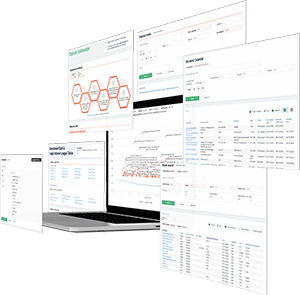

full data on over 1 000 000 bonds, 100 000 stocks, 100 000 indices, 17 000 ETF and 150 000 Mutual Funds; powerful bond screener; over 350 pricing sources among stock exchanges & OTC market; ratings & financial reports; user-friendly interface; available anywhere via Website, Excel Add-in and Mobile app.
Register


Short videos that will help you quickly get used to and start using the service.


High-yield bonds are corporate debt securities rated below investment grade, typically in the range from C/C/C to Ba1/BB+/BB+ by two of the major credit rating agencies (Moody’s / S&P/ Fitch). Due to their lower credit quality, these instruments offer higher yields compared to investment-grade bonds, compensating investors for taking on additional credit risk.
In the broader fixed income hierarchy, high-yield bonds occupy a middle position between safer, investment-grade debt and equities. While they are still debt instruments with contractual cash flows, their risk profile is significantly higher, and their behavior in the market often resembles that of equities — especially during periods of economic stress.
The fundamental concept behind high-yield bonds is straightforward: investors demand a higher return in exchange for accepting a higher probability of default. This risk-return trade-off makes the asset class particularly attractive for income-focused strategies, but also more sensitive to changes in economic conditions and investor sentiment.
Beyond their credit ratings, high-yield bonds share a number of characteristics related to the type of issuers and structural features they typically involve.
These bonds are usually issued by companies with elevated leverage levels, limited operating history, or undergoing strategic transitions such as restructurings or expansions. In many cases, issuers are smaller and operate in more cyclical industries than typical investment-grade companies, which increases the uncertainty of their cash flows.
One of the key features of high-yield bonds is their relatively high coupons. These coupon payments tend to be the primary driver of total return over time, distinguishing the asset class from lower-yielding, rate-sensitive investment-grade bonds.
Structurally, high-yield bonds often include embedded features that affect both risk and return. Callable structures are common, allowing issuers to refinance their debt if market conditions improve. At the same time, bond documentation may include covenants designed to protect investors — though the strength and enforcement of these covenants can vary significantly across issuers and market cycles.
Overall, High-yield bonds combine elements of fixed income and credit risk exposure, making them a distinct and complex segment of the global capital markets.
The performance of High-yield bonds is driven by a combination of coupon payments, changes in credit spreads, and realized credit losses, making these instruments fundamentally different from traditional rate-sensitive fixed income instruments.
The primary source of return is coupon payments. The elevated yields of high-yield bonds provide a steady cash flow that contributes significantly to total return over time, especially when default rates remain contained.
Another critical driver is the movement of credit spreads. When spreads tighten — typically during periods of economic stability or improving growth — bond prices rise, generating capital gains. Conversely, during periods of stress, spreads widen, leading to price declines.
Default rates and recovery values also play a central role. Higher default rates directly reduce returns, while recovery rates determine how much capital investors can recoup in the event of issuer distress.
Unlike investment-grade bonds, high-yield securities are less sensitive to interest rate movements through duration, though still exposed to rates indirectly via refinancing costs. Instead, they are primarily influenced by credit risk dynamics and overall market sentiment. As a result, their performance tends to be closely linked to the economic cycle and investor risk appetite.
High-yield bonds carry a distinct and multi-dimensional risk profile, with credit risk being the dominant factor.
The most significant risk is default risk — the possibility that an issuer will be unable to meet its debt obligations. This risk is inherently higher than in investment-grade bonds and varies significantly across rating categories, industries, and economic conditions.
Spread volatility is another key consideration. Credit spreads can fluctuate widely depending on macroeconomic trends, liquidity conditions, and shifts in investor sentiment, leading to meaningful price volatility even in the absence of actual defaults.
Liquidity risk is also important, particularly during periods of market stress. High-yield bonds may become difficult to trade without significant price concessions, amplifying losses for investors who need to exit positions quickly.
Refinancing risk has become increasingly relevant in higher interest rate environments. Companies that rely on continuous access to capital markets may face challenges rolling over debt at sustainable costs, increasing the likelihood of distress.
Finally, high-yield bonds tend to exhibit a higher correlation with equities compared to other fixed income assets, especially during downturns. This behavior reflects their sensitivity to corporate earnings, economic conditions, and overall risk sentiment.
Together, these factors make high-yield bonds a credit-driven asset class with asymmetric risk characteristics, where downside risks can materialize quickly during adverse market conditions.
The high-yield bond market is internally segmented by credit ratings, which serve as a primary indicator of default risk and expected return. While all high-yield bonds fall below investment grade, the differences within the category are substantial and have important implications for risk and performance.
The upper tier of the high-yield spectrum is composed of BB-rated bonds. This segment includes "fallen angels" — companies that were previously investment grade but have experienced a deterioration in credit quality — alongside issuers that have always been rated high-yield. BB bonds typically offer a moderate yield premium with relatively lower default risk compared to the rest of the high-yield universe.
The core of the market consists of B-rated bonds, issued by companies with higher leverage and less stable cash flows that nonetheless maintain access to capital markets. This segment tends to offer a balanced trade-off between yield and risk, making it a central allocation for many high-yield investors.
At the lower end are CCC-rated bonds and below, issued by companies that face a significantly higher probability of default. Their prices are highly sensitive to company-specific developments and broader market conditions. These bonds are often considered distressed securities, and returns in this segment can be highly asymmetric, with the potential for both substantial gains and severe losses.
Overall, risk within the high-yield market is not linear. Moving down the rating scale leads to a disproportionately higher increase in default risk, making segmentation a critical component of portfolio construction and risk management.
The high-yield bond market is global in scope, with distinct regional characteristics that influence liquidity, sector composition, and risk dynamics.
The United States represents the largest and most developed high-yield market. It is characterized by deep liquidity, broad sector diversification, and a well-established investor base. The US market often sets the tone for global high-yield trends, particularly in terms of spread movements and issuance activity.
The European high-yield market has historically been smaller and more bank-centric than its US counterpart, with companies relying more on bank financing than on capital markets. However, over the past decade, the European HY market has grown in size, diversified across sectors, and matured in terms of investor base and liquidity, although it still remains smaller and less liquid than the US market.
Emerging markets introduce an additional layer of complexity. High-yield bonds from these regions typically offer higher yields but are subject to increased macroeconomic, political, and currency-related risks. Liquidity can also be more limited, and performance may be influenced by global capital flows.
Across regions, the high-yield market tends to be concentrated in cyclical sectors such as energy, industrials, telecommunications, and consumer discretionary. These sectors are more sensitive to economic conditions, reinforcing the cyclical nature of the asset class.
The structure of the market — across ratings, regions, and sectors — plays a crucial role in shaping both opportunities and risks for investors.
The performance of high-yield bonds has historically been closely tied to the economic cycle, reflecting their strong dependence on corporate credit conditions and investor risk appetite.
During periods of economic expansion, high-yield bonds tend to perform well. Improving corporate earnings, stable cash flows, and favorable refinancing conditions contribute to lower default rates and tightening credit spreads. In such environments, investors benefit from both high coupon income and capital appreciation.
In contrast, during economic downturns or financial crises, high-yield bonds can experience significant stress. Credit spreads widen sharply as risk aversion increases, leading to substantial price declines. At the same time, default rates rise, further impacting returns.
Over the long term, default rates in the US and global high-yield markets have typically averaged around 3–4% annually, though this figure varies significantly across cycles. Periods of elevated defaults — such as during recessions — can see rates rise multiple times above the long-term average.
Recovery rates also play an important role in shaping outcomes. Even in default scenarios, investors may recover a portion of their capital, depending on the issuer’s asset base and capital structure.
Overall, historical behavior highlights the cyclical and risk-sensitive nature of high-yield bonds, with periods of stable income punctuated by episodes of heightened volatility and drawdowns.
Valuing high-yield bonds requires a credit-focused approach that emphasizes spreads, default expectations, and relative value rather than purely interest rate considerations.
One of the primary valuation tools is the credit spread — the difference in yield between a high-yield bond and a risk-free benchmark, such as government bonds. Spreads reflect the market’s assessment of credit risk and tend to widen during periods of uncertainty and tighten when conditions improve.
Yield-to-worst (YTW) is commonly used as a conservative measure of potential return, taking into account early redemption features such as call options. This metric provides a more realistic estimate of downside-adjusted yield compared to simple yield-to-maturity.
Price levels also offer important signals. Bonds trading near or above par are typically associated with lower perceived risk, while deeply discounted bonds may indicate elevated distress or uncertainty. In particular, bonds trading significantly below par are often classified as distressed and require more specialized analysis.
Relative value analysis is another key component. Investors compare bonds within the same sector, rating category, or region to identify mispricings and optimize portfolio allocation.
Ultimately, valuation in the high-yield market is a combination of quantitative metrics and qualitative credit assessment, requiring a careful balance between yield enhancement and risk control.
High-yield bonds play a distinct role in portfolio construction, primarily as a source of enhanced income and diversified credit exposure.
One of the main reasons investors allocate to high-yield bonds is to increase overall portfolio yield. Compared to investment-grade fixed income, high-yield securities offer a significant income premium, which can be particularly attractive in low-rate environments.
In addition to income generation, high-yield bonds can offer diversification benefits within a fixed income allocation. While they are part of the fixed income universe, their return drivers differ from those of government and high-quality corporate bonds, and they tend to be less correlated with interest rate movements. However, these diversification benefits are limited: high-yield bonds are strongly correlated with equities, particularly during periods of market stress, when diversification is most valuable.
Portfolio allocation decisions within the high-yield segment often involve balancing exposure across rating categories, sectors, and regions. Active management and credit selection play a critical role in managing downside risk and capturing relative value opportunities.
The performance of high-yield bonds varies significantly across different macroeconomic and market environments, reflecting their sensitivity to both credit conditions and investor sentiment.
In periods of economic growth and stability, high-yield bonds tend to perform strongly. Credit spreads tighten as default risk declines, and issuers benefit from improved earnings and easier access to financing. In such conditions, investors capture both high coupon income and potential price appreciation.
During economic slowdowns or recessions, the asset class faces increased pressure. Credit spreads widen, reflecting heightened uncertainty and risk aversion, while default rates rise. These dynamics can lead to sharp price declines and increased volatility.
In high interest rate environments, refinancing risk becomes more pronounced, particularly for lower-quality issuers. Companies that rely on frequent access to capital markets may struggle to roll over debt at sustainable costs, increasing the likelihood of financial distress.
Liquidity conditions also play a key role. In stable markets, liquidity supports efficient pricing and trading activity. However, during periods of stress, liquidity can deteriorate rapidly, amplifying price movements and making it more difficult for investors to adjust positions.
Overall, high-yield bonds exhibit a cyclical performance pattern, performing best in supportive economic environments and facing challenges during periods of financial stress and tightening conditions.
High-yield bonds occupy an intermediate position between traditional fixed income instruments and equities, combining elements of both in terms of risk and return characteristics.
Compared to investment-grade bonds, high-yield securities offer significantly higher yields, reflecting their elevated credit risk. While investment-grade bonds are more sensitive to interest rate movements, high-yield bonds are primarily driven by credit conditions and spread dynamics. This makes them less rate-sensitive but more exposed to economic cycles.
In comparison to equities, high-yield bonds generally offer a lower upside potential — their returns are capped by contractual coupon and principal payments — but provide greater structural protection. Bondholders have a higher claim in the capital structure, meaning they are prioritized over equity holders in the event of liquidation. Additionally, coupon payments are a contractual obligation of the issuer, providing a more predictable income stream than equity dividends, which are paid at the company's discretion.
However, during periods of market stress, high-yield bonds often exhibit behavior similar to equities, with increased volatility and stronger correlation driven by shared exposure to corporate fundamentals and investor risk sentiment.
Effective analysis of high-yield bonds requires continuous monitoring of several key indicators that reflect both market conditions and underlying credit risk.
Among the most important metrics are yield levels and credit spreads, which provide insight into market pricing of risk and potential return. Default rates are another critical indicator, offering a direct measure of credit deterioration across the market. Recovery rates complement this by indicating the proportion of capital that can be recovered in default scenarios.
Investors also monitor the distribution of credit ratings within the market, as shifts toward lower-quality segments may signal increasing risk. Liquidity indicators, such as trading volumes and bid-ask spreads, are essential for understanding market functioning, particularly during periods of stress.
In summary, high-yield bonds represent a credit-driven asset class that offers enhanced income in exchange for higher risk. Their performance is shaped by economic cycles, credit conditions, and investor sentiment. When used strategically, they can play a valuable role in portfolio construction, but they require careful analysis, active monitoring, and disciplined risk management.







 Bond Screener