









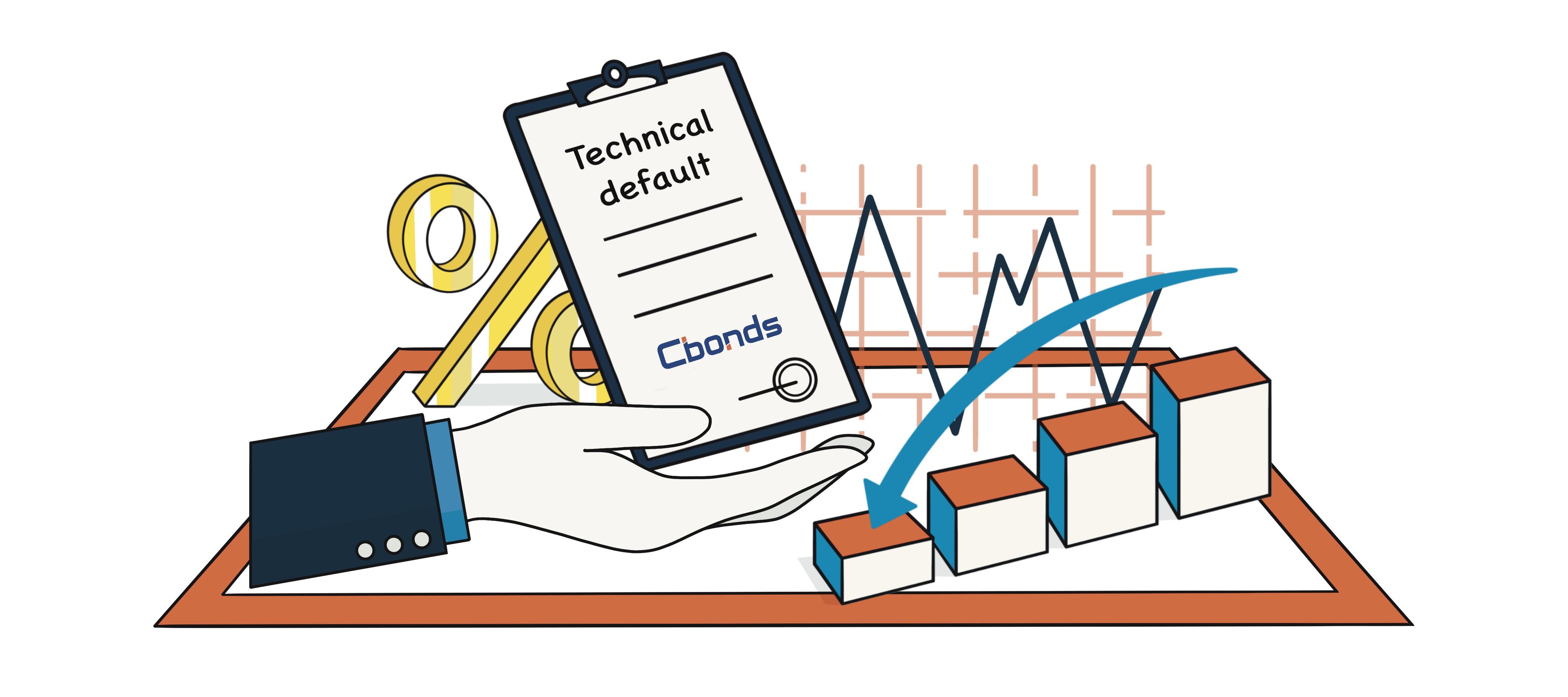
A technical default occurs when a loan agreement exhibits a shortcoming due to a failure in adhering to specific loan terms, excluding the regular payment schedule. This kind of default suggests that the borrower might be facing financial difficulties, potentially leading to adverse consequences such as a rise in the loan’s interest rate, foreclosure, or other unfavorable outcomes.
Technical defaults can result from various factors, with lenders typically defining the conditions that can trigger such defaults in their loan agreements. Throughout the loan term, borrowers are obligated to abide by all provisions stipulated in the agreement.
Lenders can tailor these provisions leading to technical defaults to encompass a wide range of factors. Common provisions in standard loans may involve maintaining specific qualifying ratios. For personal loans and credit cards, this might involve the borrower’s total debt-to-income ratio, while for mortgage loans, it could include the housing expense ratio and debt-to-income ratio.
While the timely payment of installments is the most easily recognizable provision, borrowers should be mindful of other potential loan conditions that could lead to a technical default.
Depending on the loan’s terms, some lenders might offer grace periods to allow borrowers to rectify certain aspects that led to the technical default. This leniency is more likely if the borrower has a history of no missed payments or other delinquencies on their account.
Property Taxes and Insurance Premiums. Failure to maintain current property tax and insurance payments could lead to technical default for both residential and commercial real estate borrowers, even if they make their mortgage payments to the debt holder on time.
Building Maintenance and Repairs. Commercial real estate loans might include provisions that require the borrower to keep the property well-maintained and undertake necessary repairs.
Tenant Occupancy. In commercial real estate, the presence of tenants may be a condition for the loan agreement, and a lack of occupancy could trigger a technical default.
Current Ratio. A company might be required to maintain a specific current ratio (current assets divided by current liabilities) to demonstrate its ability to meet short-term obligations.
Quick Ratio. Similar to the current ratio, the quick ratio (current assets minus inventory divided by current liabilities) may also be a condition to gauge a company’s liquidity.
Debt-to-Equity Ratio. The loan agreement may stipulate a target debt-to-equity ratio that the company must maintain to ensure a healthy capital structure.
Working Capital Levels. The borrower might be required to maintain a certain level of working capital to cover day-to-day operations and expenses.
Debt service default, also known as actual default, happens when the borrower fails to make a scheduled payment of interest or principal as specified in the loan agreement. In this type of default, the borrower is unable to meet their financial obligations to repay the loan on time. It directly affects the lender’s cash flow and can lead to serious consequences, such as penalties, late fees, and, if not resolved, may ultimately result in foreclosure or other legal actions to recover the outstanding amount.
On the other hand, a technical default occurs when the borrower violates an affirmative or a negative covenant outlined in the loan agreement. A covenant is a set of terms and conditions that the borrower must adhere to during the life of the loan. The covenant could be a requirement to maintain specific financial ratios, meet certain operational standards, or fulfill other contractual obligations. When the borrower breaches any of these conditions, it results in a technical default. Unlike debt service default, a technical default might not directly impact the scheduled payment of interest or principal, but it signals that the borrower may be facing financial difficulties or is not meeting the agreed-upon terms of the loan.
Increased Interest Rate. A technical default may prompt the lender to exercise their right to increase the interest rate on the loan. This can result in higher monthly payments for the borrower, making it even more challenging to meet their financial obligations.
Foreclosure. In the case of mortgage loans or real estate-related loans, a technical default may lead to foreclosure proceedings. If the borrower fails to address the default and bring the loan back into compliance with the agreed-upon terms, the lender may take legal action to seize and sell the property to recover the outstanding loan amount.
Acceleration of Loan Repayment. Some loan agreements contain acceleration clauses allowing the lender to demand immediate repayment of the outstanding loan balance if the borrower defaults. A technical default could trigger the activation of this clause, placing additional financial strain on the borrower.
Imposition of Late Fees and Penalties. The loan agreement may specify penalties for technical defaults, such as late fees or other charges. These additional costs can quickly add up and worsen the borrower’s financial situation.
Damage to Credit Score. A technical default will likely be reported to credit bureaus, negatively impacting the borrower’s credit score. This can make it harder for the borrower to obtain credit in the future and may result in higher interest rates on other loans.
Loss of Collateral. In secured loans where the borrower pledges collateral (e.g., real estate or valuable assets), a technical default could lead to the lender seizing and selling the collateral to recover their losses.
Legal Proceedings. Sometimes, the lender may take legal action against the borrower to enforce the loan agreement and recover the outstanding debt. This could result in court proceedings and additional costs for the borrower.
Strained Borrower-Lender Relationship. A technical default can strain the relationship between the borrower and the lender. It may lead to reduced trust and cooperation, making negotiating new terms or solutions to address the default harder.
In the context of loan contracts, there are two main types of defaults: actual or technical default. An actual default occurs when the borrower fails to make scheduled loan payments (monetary default) or breaches other key provisions in the loan contract (non-monetary default). On the other hand, a technical default arises when the borrower violates negative covenants or fails to fulfill certain requirements outlined in the loan contract, or a corporation may enter technical default if it fails to meet the specified debt-to-equity ratio outlined in its loan agreement.
In such a case, the loan contract will typically outline provisions detailing the consequences of a financial default, including an interest rate increase, freezing credit lines, or accelerated repayment. Maintaining operational ratios is crucial for business borrowers to avoid defaulting on the credit contract. For instance, a corporation could face a financial default if it falls short of meeting the promised debt-to-equity ratio stated in the loan contract, even if there is just a delay in loan payments.
In some instances, non-monetary defaults could be triggered by issues unrelated to loan payments, such as failing to maintain homeowners insurance on a property. This could result in the bank freezing credit lines or taking other corrective measures.
One example of a standard positive covenant in a loan contract could be the requirement for a borrower to maintain a certain level of working capital. Rating agencies may monitor loan contracts to identify potential credit events, which could affect the debt holder’s perception of risk. In the case of a credit event, the borrower might face accelerated repayment or other consequences outlined in the loan contract.


Everything you need for fixed income research and monitoring.






 Bond Screener
 Hide
Hide 