









A swap is a derivative contract where two parties exchange assets with cash flows over a predetermined time frame. These assets can include fixed and variable rate payments, currencies, commodities, and more. The value of at least one asset involved is influenced by factors like interest rates or commodity prices, making swaps a vital tool for managing various financial risks, including interest rate risk and currency risk.
A swap is a bilateral, over-the-counter (OTC) derivative product that usually involves two parties, known as counterparties, who agree to exchange cash flows over a specified time frame, which can range from months to years. The precise details of the swap agreement are subject to negotiation between the counterparties and are subsequently formalized in a legally binding contract. These negotiated terms encompass several critical elements, including the specific assets or financial instruments to be exchanged, the notional principal amount, the contract’s maturity date, and any contingencies or conditions that may apply. Calculating the cash flows exchanged is based on contractual terms, which could involve an interest rate, an index, or another underlying financial instrument. This flexibility in structuring allows swaps to be tailored to the unique needs and objectives of the parties involved, making them versatile tools in managing a wide range of financial risks and opportunities.
One common type is the plain vanilla interest rate swap, where fixed-rate payments are swapped for floating-rate payments throughout the swap’s duration. A swap contract can be seen as a simultaneous position in two bonds. The decision to enter into a swap often hinges on a comparative rate advantage, with one party having a relative edge in either the fixed or floating rate market.
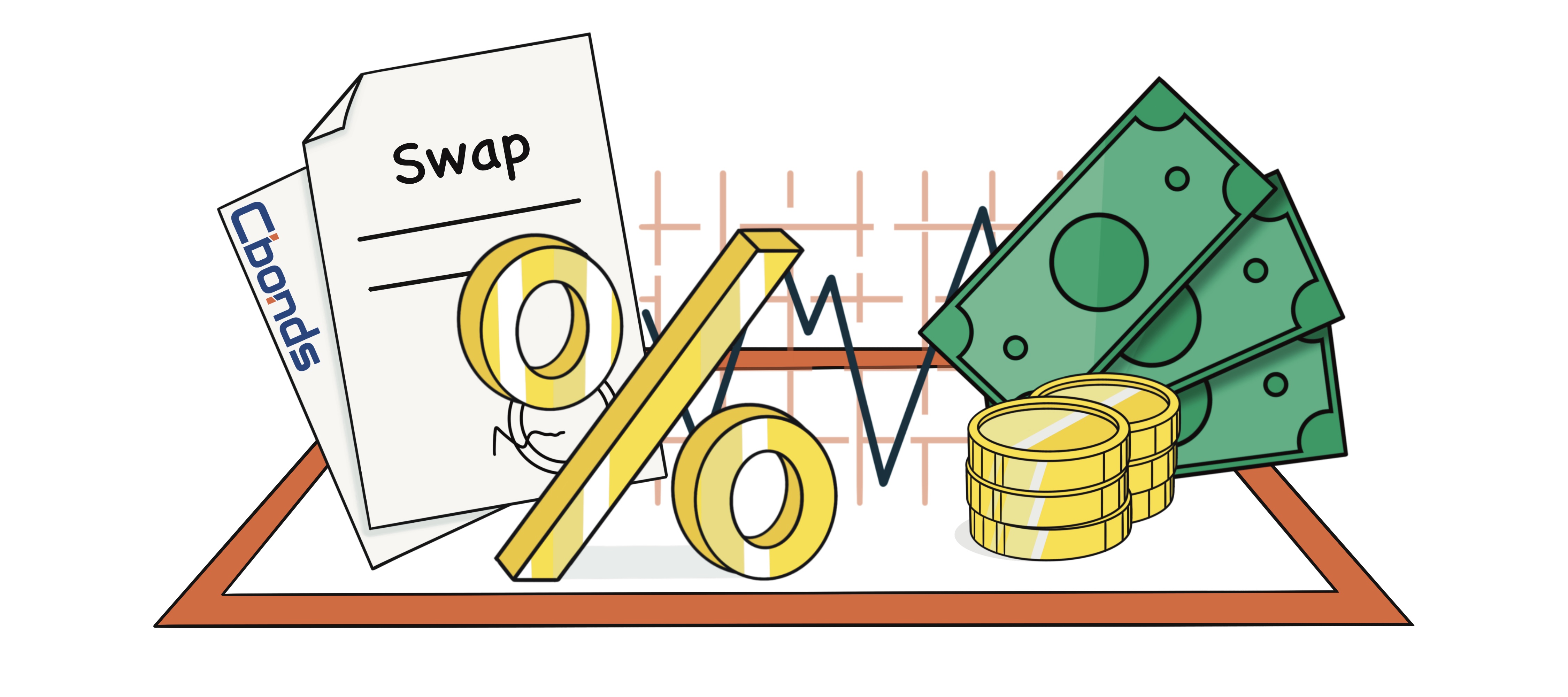
Interest Rate Swaps. This is the most common type of swap. In an interest rate swap, two parties exchange cash flows based on a notional principal amount to hedge against or speculate on interest rate movements. For example, a company might swap a variable interest rate tied to LIBOR for a fixed rate to mitigate the risk of rising interest rates.
Commodity Swaps. Commodity swaps involve exchanging floating commodity prices, such as the Brent Crude oil spot price, for a predetermined price over an agreed-upon period. Typically, this type of swap is used with commodities like crude oil.
Currency Swaps. In currency swaps, parties exchange both interest and principal payments on debt denominated in different currencies. Unlike interest rate swaps, the principal amount is notional but is exchanged along with interest obligations. Currency swaps are used for various purposes, including stabilizing foreign reserves between countries.
Debt-Equity Swaps. Debt-equity swaps involve exchanging debt, often in the form of bonds, for equity, such as company stocks. This enables companies to refinance their debt or restructure their capital.
Total Return Swaps. Total return swaps involve exchanging the total return from an asset for a fixed interest rate. This exposes one party to the underlying asset’s performance, like a stock or an index. For example, an investor might pay a fixed rate in return for the capital appreciation and dividends from a portfolio of stocks.
Credit Default Swap (CDS). A credit default swap is an agreement where one party agrees to compensate the CDS buyer if a borrower defaults on a loan, covering lost principal and interest. CDS played a role in the 2008 financial crisis due to issues related to excessive leverage and poor risk management.
Subordinated Risk Swaps (SRS). Subordinated risk swaps, also known as equity risk swaps, involve one party paying a premium to another for the option to transfer certain risks associated with equity ownership, management, or legal aspects of an underlying asset, such as a company. These swaps help manage and hedge various entrepreneurial risks and are traded over the counter by specialized investors.
Swap pricing and valuation are fundamental aspects of understanding how swaps work:
Swap Pricing involves setting the initial terms of the swap when the contract is initiated. This includes determining the fixed and floating interest rates, the notional principal amount, the maturity date, and any other relevant terms both parties agree upon at the outset. The pricing process ensures that both parties clearly understand their obligations and benefits when entering into the swap agreement.
Swap Valuation, on the other hand, is an ongoing process that assesses the market value of the swap throughout its life. Since swaps can be seen as a series of forward contracts, their value can change over time as market conditions fluctuate. Valuation calculates the current market value of the swap based on factors such as changes in benchmark interest rates, index prices, or other underlying financial instruments specified in the contract.
Parties Involved:
ABC Inc.
XYZ Inc.
Terms of the Swap:
Swap Type: Interest Rate Swap
Duration: One year
Notional Principal: Rs. 1,00,000 (Principal amount not exchanged)
Fixed Rate (Paid by ABC Inc.): 5%
Floating Rate (Received by ABC Inc.): LIBOR + 2%
Floating Rate (Paid by XYZ Inc.): LIBOR + 2%
Fixed Rate (Received by XYZ Inc.): 5%
Scenario 1, when the one-year LIBOR is 2.75%:
ABC Inc. pays a fixed rate of 5% on the notional principal of Rs. 1,00,000, which amounts to Rs. 5,000.
ABC Inc. receives a floating rate of LIBOR + 2%, which is 2.75% + 2% = 4.75% on the notional principal of Rs. 1,00,000, amounting to Rs. 4,750.
XYZ Inc. pays a floating rate of LIBOR + 2%, which is 2.75% + 2% = 4.75% on the notional principal of Rs. 1,00,000, amounting to Rs. 4,750.
XYZ Inc. receives a fixed rate of 5% on the notional principal of Rs. 1,00,000, which amounts to Rs. 5,000.
In this scenario, the net cash flow to ABC Inc. is Rs. (5,000 - 4,750) = Rs. 250, and the net cash flow to XYZ Inc. is also Rs. (5,000 - 4,750) = Rs. 250.
Scenario 2, when the one-year LIBOR increases by 50 bps to 3.25%:
ABC Inc. pays a fixed rate of 5% on the notional principal of Rs. 1,00,000, which amounts to Rs. 5,000.
ABC Inc. receives a floating rate of LIBOR + 2%, which is 3.25% + 2% = 5.25% on the notional principal of Rs. 1,00,000, amounting to Rs. 5,250.
XYZ Inc. pays a floating rate of LIBOR + 2%, which is 3.25% + 2% = 5.25% on the notional principal of Rs. 1,00,000, amounting to Rs. 5,250.
XYZ Inc. receives a fixed rate of 5% on the notional principal of Rs. 1,00,000, which amounts to Rs. 5,000.
In this scenario, the net cash flow to ABC Inc. is Rs. (5,000 - 5,250) = -Rs. 250 (ABC Inc. pays this amount), and the net cash flow to XYZ Inc. is also Rs. (5,000 - 5,250) = Rs. 250 (XYZ Inc. receives this amount).

Everything you need for fixed income research and monitoring.






 Bond Screener
 Hide
Hide 