









Murabaha is an Islamic financing concept that allows for transactions without involving interest, which is prohibited in the Islamic finance industry. Murabaha is a contractual arrangement wherein an Islamic bank, at the request of a customer, procures an asset from an external supplier or vendor and subsequently sells it back to the customer. This sale can occur with immediate payment or can be performed on a deferred payment basis.
In this framework, typical for Islamic countries, both the buyer and the seller mutually agree upon the cost and the additional markup associated with an asset. This markup takes the place of the interest typically found in conventional loans, adhering to the prohibition of interest (riba) under Islamic law. As a result, Murabaha doesn’t entail an interest-bearing loan (qardh ribawi) but functions as a permissible credit sale according to Islamic legal principles.
The essence of a Murabaha agreement resembles a rent-to-own contract, where ownership of the asset doesn’t fully transfer to the purchaser until the entire loan amount is settled. Murabaha is a dynamic technique for facilitating financing without resorting to interest-based transactions, enabling individuals and businesses to access financial support while adhering to Islamic financial norms. The Murabaha form of financing finds application in diverse sectors, ranging from consumer finance for purchasing cars and household appliances to real estate, production, and short-term trade financing. Additionally, it is frequently utilized in issuing letters of credit and supporting import trade. The distinctiveness of Murabaha lies in its ability to provide financial solutions that align with the Sharia law while catering to various financing requirements across different industries.
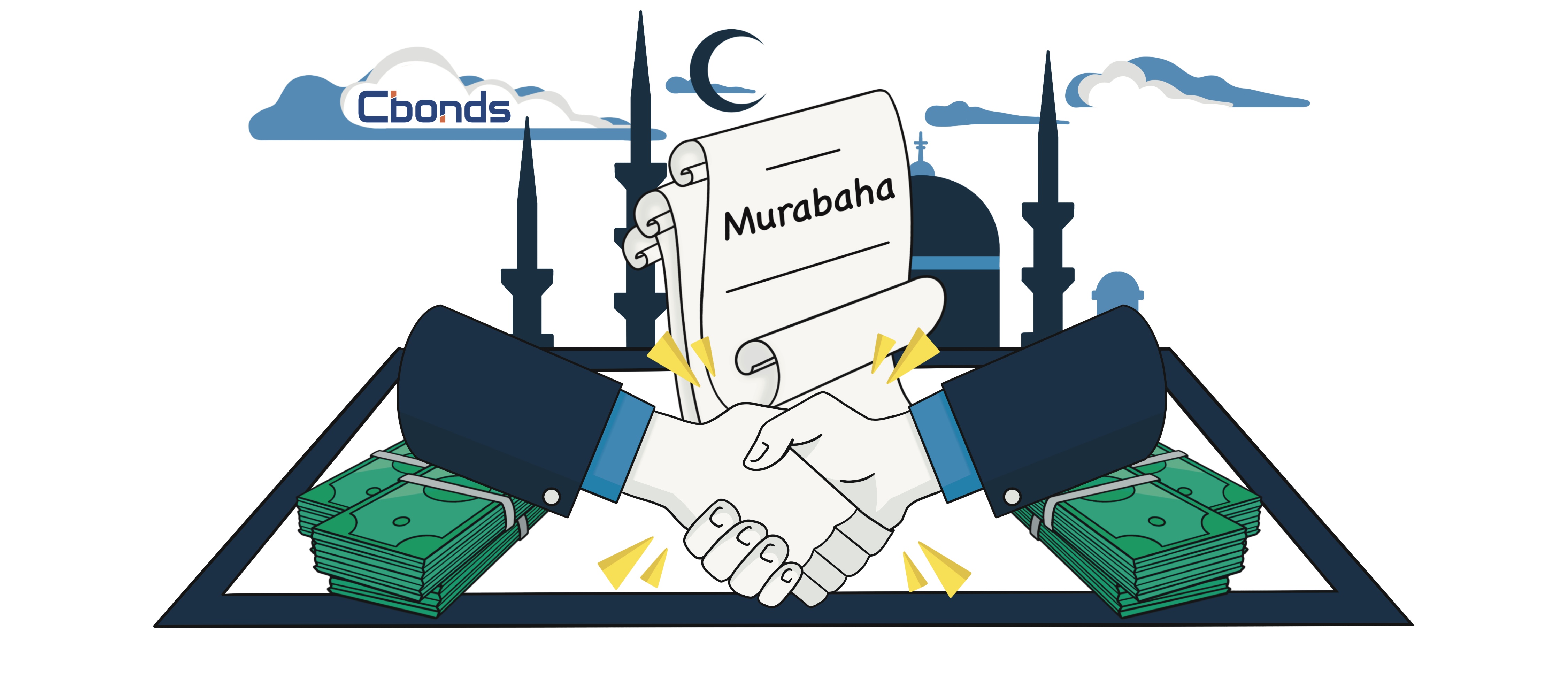
In a Murabaha sale contract, a client approaches a bank to acquire an item on their behalf. Responding to the client’s request, the bank enters into an agreement that outlines the cost and profit margin associated with the item. Repayment is typically organized into installments. Since this arrangement involves a predetermined fee rather than charging riba (interest), it aligns with the legal framework in Islamic nations. In accordance with the religious principle that money merely serves as a medium of exchange and lacks intrinsic value, Islamic banks are restricted from levying interest on loans. Consequently, these banks opt for a flat fee to support their day-to-day operations.
Critics often draw parallels between this practice and interest charges. However, the distinction lies in the contractual structure. Within a Murabaha sale contract, the bank procures an asset and subsequently sells it to the client with an added profit margin. This type of transaction is deemed halal or permissible in accordance with Islamic Sharia/Sharīʿah.
Ordinary Murabaha. In this type, the bank purchases an asset at the client’s request and subsequently sells it to the client at a higher price. The client repays the bank through installments, covering both the original cost and an agreed-upon profit. This profit is predetermined and is not linked to interest rates, ensuring adherence to Islamic finance principles.
Murabaha to the Purchase Orderer (MPO). This type involves an additional party, known as the purchase orderer, who serves as an intermediary. The process begins with the client placing a purchase order with the bank, detailing the specifications of the desired asset. Subsequently, the bank acquires the asset according to the orderer’s specifications and sells it to the client, incorporating a profit. This approach is commonly employed for substantial transactions or when the bank does not initially possess the asset.
Involves a Guarantor. Murabaha financing provides a sense of security and accountability as it involves a guarantor, which can enhance trust between parties.
Asset Ownership Transfer. Clients gain ownership of the asset through Murabaha financing, which also means they take responsibility for any defects or issues associated with the asset.
Multiple Contractors. The involvement of multiple parties in the Murabaha financing process can enhance transparency and reduce the likelihood of hidden costs.
Default Retention. In Murabaha financing, banks often retain a portion of the cost by default, which can serve as a form of security against defaults.
Minimal Down Payment. Murabaha financing usually requires only a down payment, reducing the upfront financial burden on the buyer.
No Interest Payments. Murabaha is structured to avoid interest payments, adhering to Islamic principles of finance.
Disclosure of Costs and Profit. All costs and profits associated with Murabaha financing must be transparently disclosed to the client, which can complicate the process.
Lack of Flexibility. The rigid structure of Murabaha financing might lack flexibility to accommodate changing financial circumstances.
Legal Consequences and Defaults. Defaults in Murabaha financing can lead to legal actions and/or overdue repayments, potentially causing financial stress for the parties involved.
Cost Retention by the Bank. Banks often retain a significant portion of the cost in Murabaha financing, which could be seen as a financial drawback for clients.
Down Payment Requirement. Murabaha financing typically necessitates a down payment, making it necessary for clients to provide a certain amount upfront.
Higher Cost for Banks. The process of Murabaha financing can be costlier for banks due to the involved processes and administrative overhead.
The Murabaha financing model finds widespread utility across various sectors, often serving as a substitute for conventional loans. For instance, individual consumers opt for Murabaha when acquiring household appliances, automobiles, or real estate properties. Similarly, businesses embrace this financing approach for procuring machinery, equipment, or raw materials. Furthermore, Murabaha plays a pivotal role in short-term trading scenarios, such as facilitating letters of credit for import operations.
A Murabaha letter of credit is initiated on behalf of the applicant (importer). The bank responsible for issuing the letter of credit commits to disbursing a specified sum in accordance with the terms stipulated therein. As the bank’s creditworthiness supersedes that of the applicant, the beneficiary (exporter) enjoys a payment guarantee. This arrangement shields the exporter by transferring the payment risk to the bank. Conforming to the provisions of the Murabaha contract, the importer is obligated to reimburse the bank for the cost of goods along with an added profit margin.
Ali and his family are interested in purchasing a condominium valued at $240,000. To achieve this, Muhammad is collaborating with an Islamic bank for the condo acquisition. In this process, this Murabaha bank undertakes the purchase of the condo from the seller at a cost of $240,000 and subsequently sells it to Ali for $286,000. Ali will make the payment through monthly installments spanning a 15-year duration. The monthly installment, excluding insurance and taxes, is set at $1,586.21.
The total sum of $286,000, which Muhammad is contributing for the condo, stands as a fixed payment to his lender, the property’s current owner. The additional amount that Ali pays, coupled with the initial condo cost outlined by the seller, encompasses a profit rate of 2.375% (APR). It’s worth noting that this profit rate is distinct from interest, as it constitutes a predetermined sum devoid of any additional costs and charges. Consequently, this transaction adheres to Shariah principles.
While there is the possibility of late charges, it’s important to clarify that the contract balance remains non-compounded.
Murabaha:
Buyer’s Knowledge of Price. In Murabaha, the buyer is aware of the actual purchase price of the asset being purchased from the seller.
Obligation to Buy. The buyer in Murabaha remains under an obligation to buy the asset as they initiated the process of buying it.
Seller’s Honesty. The seller’s honesty is not a mandatory requirement in Murabaha transactions.
Bargaining. Murabaha does not involve bargaining over the price of the asset; it operates under a cost-plus sale mechanism.
Trust-Based Sale. Murabaha falls under the category of trust-based sales, operating transparently under Sharia principles.
Musawamah:
Buyer’s Knowledge of Price. In Musawamah, the buyer does not know the actual price of the asset being sold by the seller.
Price Determination. The bargaining abilities of both the buyer and the seller determine the final price of the asset in Musawamah.
Seller’s Honesty. In Musawamah transactions, the seller is required to be honest in their dealings.
Bargaining. Musawamah involves bargaining between the buyer and the seller to determine the final price of the asset.
Absolute Selling Mechanism. Musawamah operates under an absolute selling mechanism, where the negotiation process takes precedence over the transaction.
Trust-Based Sale. Unlike Murabaha, Musawamah does not come under the category of trust-based sales.
Murabaha:
The title holder of the financed property remains the customer.
The interest rate remains fixed throughout the loan duration.
No prepayment is usually allowed to the customer.
There is no provision for refinancing.
The entire risk associated with the asset falls upon the customer.
In the event of late payments by the customer, the bank bears the loss.
Ijarah:
The title holder of the financed property is usually the lessor (financier).
The interest rate remains variable.
Prepayment is often allowed to the customer.
Prepayment is generally allowed to the customer.
The entire risk of the asset falls upon the financier (lessor).
In case of late payments by the customer, the financier can control losses due to the late payment.
Murabaha:
Murabaha involves a loan from the bank to the customer.
It is a short-term investment.
Banks predominantly use Murabaha.
In Murabaha, the bank serves as the lender and the customer as the borrower.
Musharakah:
Musharakah represents a joint venture between partners.
It is a long-term investment.
Venture capitalists typically employ Musharakah.
In Musharakah, both parties are equal partners in the venture.


Everything you need for fixed income research and monitoring.






 Bond Screener
 Hide
Hide 