









Explore the most comprehensive database
1 000 000
bonds
80 234
stocks
167 970
ETF & Funds
70 000
indices
Track your portfolio in the most efficient way

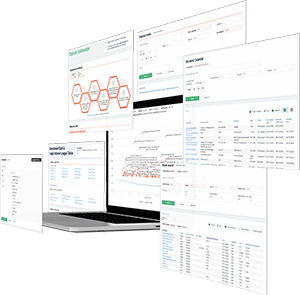

full data on over 900 000 bonds, 80 000 stocks, 116 000 ETF & Funds; powerful bond screener; over 350 pricing sources among stock exchanges & OTC market; ratings & financial reports; user-friendly interface; available anywhere via Website, Excel Add-in and Mobile app.
Register






 Bond Screener
Bond Market Insight-Ukraine - 2013 sovereign debt outlook: Is a positive performance possible?
This report summarises our views on the Ukraine sovereign debt market and assesses the ability of the MoF to cover its financing needs in 2013.
Sovereign credit rating. Ukraine\'s creditworthiness is at a dangerous crossroads, following its downgrade by both Moody\'s and S&P last December to ratings just above the default area. On the one hand, our base-case scenario sees a new IMF programme (likely in 2Q) as a likely trigger for Moody\'s and S&P to review their outlooks from negative to stable. Furthermore, if the programme is implemented successfully, we expect the ratings to be upgraded late this year. However, on the other hand, without an IMF programme and with the economy in recession, the ratings will come under increasing downside pressure.
Risk premium. Thanks to positive external factors (notably the market\'s more upbeat outlook for the Eurozone), Ukraine\'s sovereign credit risk premium has improved 250bp since mid-2012 (see top chart in sidebar) despite the deterioration in the local economy. In 2013, the premium will be a function of domestic developments: an IMF deal would cut it by another 50-100bp, in our view. Otherwise, it would trend up to near the 800bp area from the current 565bp. The same rationale applies to the UAH risk premium, whose impact on domestic interest rates depends on expectations of devaluation.
Rates. We expect US base rates to stay at their current lows; thus based on our risk premium assumptions in our base-case scenario, we expect Ukraine\'s sovereign 10yr debt yield to range from 6.7-7.2% in 2013. Similarly, in the domestic market, the cost of one-year sovereign debt should be around 10-11% at the half-year stage and 8-9% at the year end.
Large external debt repayments. We forecast that the MoF will repay a total of UAH97.50bn in 2013, including UAH67.75bn in principal. The main debt repayments exceeding UAH10.0bn are scheduled for February, May, June, August and November.
Domestic liquidity. This year started with a high level of liquidity in the banking system, which forced banks to start submitting bids in the primary auctions for local-currency bonds. The NBU is likely to ease up on liquidity controls as part of the authorities\' pro-growth measures, which should ease local-currency borrowing rates.
\'Friendly\' demand a key source of domestic financing. We think it likely the MoF will continue to make use of demand from \'friendly\' banks with support from the NBU, as it did last year and so far this year. But this demand will not have a positive impact on the bond market, especially if the MoF dictates the level of interest rates. Via this mechanism, the NBU has become the largest holder of government bonds, with at least 59% of the total outstanding.
Read full comment in the attachment (33 pages, PDF file 1098KB)