









Explore the most comprehensive database
1 000 000
bonds
80 234
stocks
167 970
ETF & Funds
70 000
indices
Track your portfolio in the most efficient way

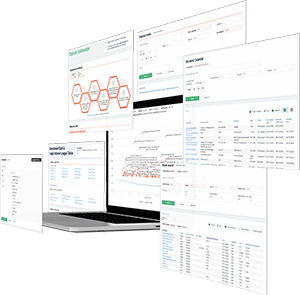

full data on over 900 000 bonds, 80 000 stocks, 116 000 ETF & Funds; powerful bond screener; over 350 pricing sources among stock exchanges & OTC market; ratings & financial reports; user-friendly interface; available anywhere via Website, Excel Add-in and Mobile app.
Register





 Bond Screener
Ukraine handbook 2013: Closer look at a rare species
This handbook is about 2013\'s prospects for Ukraine\'s economy and its key sectors which we cover, such as metals and mining, food and agribusiness, and banks. In the report, we provide our stock recommendations as well as views on the credit profiles of the key Eurobond issuers of Ukrainian origin.
Prospects for 2013 at a glance
Politics. The 28 October parliamentary elections did not produce any surprises, ie, incumbents remain in place to rule, while the opposition remains on the sidelines. Incumbent President Yanukovych is set to appoint a new government, and he counts on his faithful political alliances\' hold on the majority of seats in the legislature. During the next two-year period, which we refer to as the 2013-14 political cycle, Mr Yanukovych\'s prime goal will be his successful re-election in the presidential run-offs to be held in early 2015. The active election campaign for the presidency is in fact expected to begin in early 2014. Hence, in effect, the entire year of 2014 is likely to restrain officials from effecting any kind of reform. This said, it appears that the incumbent government is left with one year (2013) in which their hands will not be tied by the auspices of populism. We, therefore, believe the reforms agenda has a reasonable chance of being realised particularly over the course of 2013 and under the dictate of the authorities\' basic survival instinct that will be more and sharper.
Economy. On the eve of 2013, Ukraine\'s economy has very likely entered a double-dip recession, which is, however, likely to be shallow and short-lived rather than steep and long-lasting. Hence, it is very likely, too, that this recession is to spill over well into next year. With the economy in recession and deteriorating sovereign creditworthiness, these conditions are pushing Ukraine towards striking an agreement with the IMF very early next year to resume receiving funding under the condition of carrying out economic reforms. Overall, our base-case call for 2013\'s real GDP growth rate is 1.7% YoY, an improvement from the slowdown seen in 2012, where growth is expected to be at 0.2% YoY. Balance of payments issues, in which a US$11bn current account deficit and a US$9bn of sovereign debt is due for repayment (not to mention the private sector debt), are among the prime factors of concern, and will place a burden on the central bank in 2013. Even with the IMF programme back on track, FX reserves are forecast to remain largely flat. Hence, authorities are set to extend a managed weakening of the UAH from 8.30/USD at year-end 2012 towards 9.00/USD at year-end 2013, while next year\'s average rate is forecast to be at 8.75/USD.
Public finances & sovereign Eurobonds. Public finances will be under pressure over 2013. Officially, the state budget is forecast to be at a deficit of 3.2% of GDP in UAH terms. Our forecast is for a deficit of 3.7%. Effectively, this means that the government is going to run a primary deficit of more than 1.0% of GDP, and hence the debt-to-GDP ratio is set to rise, to 30%, if authorities engineer a managed weakening of the UAH exchange rate; otherwise (if the UAH devalues), it may overshoot this target. In gross terms, total debt repayments scheduled for the year, especially external debt repayments including IMF loan repayments, are quite sizable. Preliminary figures show that next year, UAH67.10bn in principal will be repaid, including UAH32.59bn in external debt repayments and UAH34.51bn in local debt. To cover these repayments and other budget needs, the MoF is planning to borrow a total of about UAH116.6bn next year, including UAH82.4bn of local borrowings and UAH34.2bn of external borrowings. These plans also include a UAH16.0bn increase in Naftogaz\'s share capital and UAH6.1bn of borrowings to the special fund. Due to the fact that Ukraine\'s economy will still suffer from the twin deficits of the central government and current account, sovereign credit ratings (Moody\'s: B3/Negative; S&P: B/Negative; Fitch: B/Negative) have very slim chances for an upgrade over 2013. Hence, sovereign Eurobond prices will still lack support from internal developments in the economy, despite the fact that the IMF agreement is part of our base-case scenario for 2013.
Metals & mining. Most sectors of the Ukrainian metals & mining industry, being export-oriented, will significantly depend on further economic growth in China, and on whether the Western national economies\' business confidence can be restored in 2013. The steel sector is in the biggest danger, as the redundant global steel supply currently hardly matches the demand. We expect Ukraine\'s exported steel prices to slip 2-5% YoY recovery, driven by emerging economies and improved business confidence. At the same time, Ukrainian steelmakers\' export volumes may drop 0-4%, with substantial downside risks and the respective negative implications for the sector leader, Metinvest. The iron ore sector has slightly better prospects, mostly due to China\'s ongoing strong demand for ore imports, and is likely to increase its weight in the industry\'s exports. We expect Metinvest, Ferrexpo, and other iron ore producers to further ramp up their iron ore exports, with prices set for a more moderate decline of 0-3% YoY in 2013. Ferrexpo\'s stock and Eurobonds are our top pick in the sector. Domestic private miners of coking coal continue to benefit from the ongoing shortage of high-quality domestic coal in the country, but may see another decline, by 2-6% YoY, in their selling prices, traditionally pegged to international benchmarks. Ukrainian miners of steam coal are much more reliant on the domestic market. The state\'s excessive interference has brought the Ukrainian steam coal market to unprecedentedly high inventories in October-November 2012, inevitably leading to a trading volumes deterioration in 4Q12-1H13 and threatening, first of all, small private miners, including Sadovaya Group and Coal Energy. At the same time, the government is likely to provide further support for steam coal prices and additional demand from the switching from gas to coal in the longer term.
Food & agribusiness. Ukraine\'s grain harvest in 2012-13 is estimated at 44m tonnes, or down 23% YoY. Due to a lower supply of grain, Ukraine\'s export is estimated at 19.5-21.0m tonnes in 2012-13, compared to 23.4m tonnes in 2011-12. Currently, we see no necessity to introduce restrictions on grain exports. However, we think that Ukrainian authorities will be forced to impose an absolute export ban only if the country\'s grain exports would lead to a stock-to-use ratio of 5%. According to our estimates, critical levels of exports are as follows: 7.0m tonnes of wheat; 12.0m tonnes of corn; and 3.5m tonnes of barley. We see no risk for crop growers and oilseed processors if the hryvnia weakens, according to our base-case scenario, over 2013. At the same time, such a development would have a negative effect on the producers of sugar, milk and meat. However, if our worst-case scenario unfolds, with the UAH devaluing to 10/USD and beyond, producers of sugar, milk, and meat are likely to suffer a heavier burden in their financial standing, trimming their future cash flow.
Banks. The sector remains in a state of finding its new pace of growth and sorting through the burden of previous excessive lending practices. The quality of assets, and particularly of loan books, is still a prime issue for the banks. Similarly, the outsized loan book of the entire banking sector versus the customers\' deposits, at 1.5x as of the end of November 2012, symbolises a legacy of recklessness in lending practices 2005-08. Among the banking names, we differentiate among the public and private sector market players. The few names we favour most are Ukreximbank and Oschadbank (see pp. 100 and 105, respectively), on their current high capitalisation ratios, the evident results of state intervention in these banks, in the aftermath of the steep recession of 2008-09. These names are also to benefit from the fact that the government has the fiscal room to extend support, if needed, as public direct debt currently stands at a low 27% of GDP. The only private-sector bank among the Eurobond issuers that we view positively is First Ukrainian International Bank (FUIB; see pp.110), thanks to its fast-track move to a healthier business model (its loan-to-deposits ratio was down to 1.0x as of end 1H12), which is appropriate for the current environment.
Read full comment in the attachment (117 pages, PDF file 3347KB)