









Explore the most comprehensive database
1 000 000
bonds
80 234
stocks
167 970
ETF & Funds
70 000
indices
Track your portfolio in the most efficient way

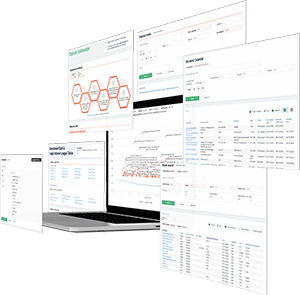

full data on over 900 000 bonds, 80 000 stocks, 116 000 ETF & Funds; powerful bond screener; over 350 pricing sources among stock exchanges & OTC market; ratings & financial reports; user-friendly interface; available anywhere via Website, Excel Add-in and Mobile app.
Register







 Bond Screener
Quarterly Report - Stretched, but holding up
Global economy conditions and outlook revised downward. The global economy has still been adjusting after the economic and financial crisis of 2007-08 sent it reeling. While post-crisis adjustments did take place in small economies like the Baltics and others, the current adjustment underway in the Eurozone, due to the region\'s economic size, institutional make-up and, national perceptions on the necessary changes, are proving to be messy, lengthy, and having a negative impact on key trading partners. This is why the Eurozone debt crisis has spread negative investor sentiment to other economies. Our macroeconomic forecast on Ukraine is based upon global indicators that have been revised lower, like world economic growth and Russia\'s economic growth, as well as crude oil, at less than US$100/bbl, and steel prices that are projected to move in a downward trajectory over the next 12-month period, followed by a period of gradual recovery.
Ukraine\'s economy has been flirting with recession. The available statistics for 1H12 showed that Ukraine\'s economy was on the edge of falling into a double-dip recession. However, after a 0.3% QoQ contraction in 1Q12, the economy grew by an estimated 0.8% QoQ, thanks to the positive impact of Euro-2012 on construction and retail trade. Other sectors like industry and transport are indeed slowly contracting, hinting that these sizably export-dependent sectors are feeling the brunt of a global slowdown. Prospects for the agriculture sector lean towards underperformance in comparison with the previous season of record-high harvest. All in all, the domestic economy is likely to drag its feet over 2H12, as it is still flirting with recession. In 2012, real GDP growth was revised downward to 1.9% YoY. An acceleration in growth is to follow in 2013 and 2014, of 3.1% and 4.0%, respectively.
Fiscal and external balances of Ukraine\'s economy. Lower growth projections for Ukraine\'s economy should lead to wider fiscal deficits that rose into the range of 1.1-1.6ppt in the 2012-13 period. Hence, the public debt level as measured by the debt-to-DGP ratio is going to start growing, as the state budget is expected to be run with the primary balance in deficit, i.e., towards the 40-45% level over the forecasted period, assuming that authorities avoid sizable currency devaluation but allow gradual flexibility. Due to the negative trajectory between prices in Ukraine\'s two main trade sectors-steel prices on the exports side, and natural gas prices on the imports side-the current account deficit projection for 2012 was revised to an increase of 0.5ppt, from 4.9% of GDP as of our estimates this April to 5.4% of GDP as of July. However, there is a silver lining in our current revision of macro forecasts. In 2013, the current account deficit is projected to contract to 2.4% of GDP (back in April, the 2013 C/A deficit forecast was 3.1%), thanks to expectations for a lower crude oil price than was seen previously.
Hryvnia. The exchange rate of the UAH versus the USD is expected to be guarded by the NBU\'s interventionist approach to FX policy. This said, however, the hryvnia\'s flexibility is being allowed in a measured and gradual manner. While pursuing this approach on the UAH, authorities are expected to allow an FX reserves reduction as sovereign external debt owed to IMF is gradually paid back. We retain our April\'s forecast that this year\'s BoP shortage is to amount to more than US$6bn, and will be covered by the use of FX reserves. Next year, in 2013, IMF lending to Ukraine is expected to resume, allowing for a BoP shortage of US$1.5bn. In the year 2014, which precedes presidential elections, Ukraine\'s authorities will find it harder to adhere to the IMF programme; hence, it may be shelved again. The UAH\'s exchange rate, currently bearing a negative bias from market players, is set to weaken, as flexibility is gradually being apportioned by the authorities; hence, we forecast the UAH to be at 8.30/USD at year-end 2012, and then at 8.50/USD at year-end 2013.
Read full comment in the attachment (40 pages, PDF file 1889KB)