









Explore the most comprehensive database
1 000 000
bonds
80 234
stocks
167 970
ETF & Funds
70 000
indices
Track your portfolio in the most efficient way

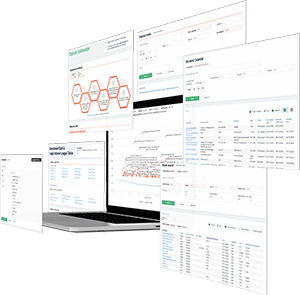

full data on over 900 000 bonds, 80 000 stocks, 116 000 ETF & Funds; powerful bond screener; over 350 pricing sources among stock exchanges & OTC market; ratings & financial reports; user-friendly interface; available anywhere via Website, Excel Add-in and Mobile app.
Register






 Bond Screener
Fixed Income Daily: We believe that as soon as in January or February, the spread may narrow to 200-220 bp, and next year, the target may become a spread level of 150 bp
EXTERNAL DEBT MARKET
The US Treasury market remained stable yesterday after falling on Friday
subsequent to the speech of Fed Chairman Greenspan, who mentioned
high risk of further USD decline against the background of persisting high
US budget deficit and possible further interest rate hikes. The yield of the
10Y UST even decreased a little from 4.20% in the morning to 4.18% in the
evening. Against this backdrop, profit taking in Russian Eurobonds
continued. The Russia-30 opened at 102.00-102.125 and fell to 101.875 by
the end of the day, while its spread widened from 231 bp on Friday to 243
bp. Profit taking also encompassed Russian corporate Eurobonds. Long
Gazprom bonds, which were the leaders of growth last week, gave up
approximately 1% yesterday. The Sibneft fell another 1% on tax claims to
the company. Other Russian corporate Eurobonds depreciated ј - Ѕ%.
Against this background, the Systema-08 and -11 added 3/8%, and the
UralSib group Eurobonds advanced also (the Nikoil-07 rose 3/8%, while the
UralSib-06 appreciated 1/4%). Other bank issues remained at their
previous price levels. Today, Russian Eurobonds have somewhat extended
their losses against stable UST. The Russia-30 fell to 101.750.
The approaching end of the year and an extensive rally in Russian
Eurobonds over the last 3-6 months justifies profit taking. Let us remind
that the Russia-30 spread has narrowed to 230 bp from 350 bp during two
months, while its price has increased to 103.500 from 85.00 in May and
95.00 at the end of the summer. Thus, investors have earned enough
profits in Russian Eurobonds to close this year relatively successfully. We
recommend that investors buy Russian Eurobonds on the bonds’ spread
widening. In particular, we believe that the Russia-30 should be bought in
case of its spread widening over 250 bp. We believe that as soon as in
January or February, the spread may narrow to 200-220 bp, and next year,
the target may become a spread level of 150 bp.
LOCAL DEBT MARKET
The 2 important auctions of Lukoil and Baltika bonds to be held today are
to become points of reference for the market. The Baltika bonds have all
the chances to become a blue chip in their sector, but the main event of the
week will be the auction of Lukoil bonds. The volume of excess demand at
the auction and the future premium to the Gazprom-5 will be a gauge of
demand for ruble issues from foreign investors, who have sharply
increased their speculative activity in the currency market. Ahead of the
auctions, market liquidity has deteriorated strongly enough, however,
aggressive selling still does not take place, while non-aggressive profit
taking prevails. It is obvious that the auction of Lukoil will be dominated by
foreign investors, as participation in auctions “at any cost” is not the end in
itself for Russian investors. The yield curve of long OFZ issues was marked
up 2 bp to 7.52-7.79% annualized; the main turnover (some RUB 25 mn)
was concentrated in the OFZ 46002, which lost 0.25%. The yield spread of
long Moscow municipals vs. OFZs widened to 23-30 bp, with the main
turnover concentrated in the Moscow-29. In corporate blue chips, the
RusAl-2 was traded the most actively, while the general level of yields in
the sector remained unchanged. Trading in other corporates was choppy,
with only selective deals. Market growth is yet limited because of stability of
government bond yields, which results in stagnation in the secondary
market. In such circumstances, it is possible to expect non-aggressive
profit taking in already traded issues.