









Explore the most comprehensive database
1 000 000
bonds
80 234
stocks
167 970
ETF & Funds
70 000
indices
Track your portfolio in the most efficient way

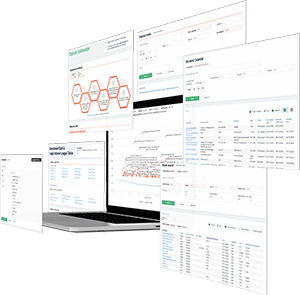

full data on over 900 000 bonds, 80 000 stocks, 116 000 ETF & Funds; powerful bond screener; over 350 pricing sources among stock exchanges & OTC market; ratings & financial reports; user-friendly interface; available anywhere via Website, Excel Add-in and Mobile app.
Register








 Bond Screener
Fixed Income Daily: This November rally may pre-empt the much expected January rally. Mind your expectations
And then there was S&P..... Great morning rally on the back of the upgrade news - all bonds participated except Sibneft which received a relatively small tax claim. I doubt anyone at the company, especially its owner, was surprised. Chelsea may have to sell Duff. UST very difficult to call as the short term action doesn\'t appear to match the fundamentals. But the fundamentals always come home to roost. Spread trades better bet in this environment.
This November rally may pre-empt the much expected January rally. Mind your expectations.
EXTERNAL DEBT MARKET
The rally in Russian Eurobonds continued yesterday and has already
brought the prices to new record highs this morning. Russia’s country
spread has continued narrowing throughout the last few days to new
historical lows. New upward plays in Russian Eurobonds were triggered by
a rise in US Treasuries for the first time over the last several days. After the
release of the US PPI thrice higher than expected, investors assumed that
the US CPI would be also extremely high, which should motivate the US
Fed to further increase its interest rates. However, although the US CPI
appeared to be above expectations, the rate of its growth was substantially
lower than the rate of PPI growth, which was positively interpreted by
investors. As a result, the yields of US Treasuries, which were growing
throughout the day yesterday (to 4.22% on the 10Y UST), fell to 4.17%
following the release of the data, and extended their losses to 4.13% on the
10Y UST this morning. Russian Eurobonds were weak over the first half of
the day yesterday against the background of weakness in the US Treasury
market. The Russia-30 eased to 101.00 ahead of the CPI release. As soon
as the data was released, the market saw a deal at 100.750 in the Russia-
30, but the price recovered instantly to 101.250 and reached 102.000 by
the end of trading in London. Today, the Russia-30 has already increased
to 102.125-102.375, while its spread is holding at 242-243 bp. Russian
corporate Eurobonds saw healthy growth, especially the Gazprom issues,
which increased by Ѕ - ѕ yesterday and surged another 1 – 1Ѕ% this
morning on the expectations of an investment rating assignment in the near
future. On the contrary, the Sibneft Eurobonds fell approximately Ѕ - 1%
this morning on the news of tax claims to the company. It is worth noting
that the majority of emerging market bonds see narrowing of their spreads
to UST. The spreads of Mexican papers are also narrowing aggressively
and are now at their minimal levels in the history. Brazilian and Turkish
Eurobonds also demonstrate aggressive spread narrowing.
The spread has entered a new price range of 200-250 bp. We believe that
the bottom of the range (200 bp) may be achieved in the course of a
traditional “New Year rally” (from late December to January). The factors
calling for positive reassessment of the Russian risk remain the same:
excellent macroeconomics, huge gold and foreign currency reserves, very
low debt and tight budget policy. The chances of further Russian credit
rating upgrades by all the rating agencies are constantly increasing.
LOCAL DEBT MARKET
Most 1st-tier issues added some 0.2% yesterday on more turnover. The
catalyst of growth was the strengthening ruble, which has reached 28.62
RUB/USD yesterday and appreciated further to 28.52 RUB/USD this
morning. Yesterday’s OFZ re-opening auctions provided a premium of
some 5 bp, which suits in the current situation both the monetary
authorities and investors. Most demand was concentrated in the longest
OFZ 46014, which now trades at some 15-18 bp yield discount to Moscow
municipals. In the Moscow municipal sector, the leader in turnover was the
Moscow-29, which trades at the widest spread to the medium-dated OFZ
yield curve, about 115 bp. Overall, prices in the sector rose some 0.1-0.4%.
In the near term, we expect the market to retain optimism. The Euro has
penetrated a psychologically important 1.3 USD/EUR level. This gives the
Russian Central Bank new opportunities to nominally lower the US dollar
exchange rate relative to the ruble, at the same time maintaining its
guidance of real ruble strengthening of no more than 7%, and this is
already taking place. Information has appeared today (but has not been
confirmed yet – see the News) that next year the Central Bank will
introduce a double-currency basket, instead of the existing multiplecurrency
one, with 70:30 ratio of the Euro and the US dollar. If we were to
extrapolate the double-currency basket to 2004, then, given inflation of
10.5% and the EUR/USD exchange rate of 1.35 as of the year end, the
Central Bank could lower the nominal dollar exchange rate to 28 rubles and
at the same time constrain real strengthening of the ruble within 7%. Also,
an uptrend in the Eurobond market has produced considerable increases in
the currency premiums of ruble-denominated government issues, which
has reached 175 bp in the situation of zero devaluation expectations (as
the yearly NDFs are now at 28.60, i.e. at the spot market level). Meanwhile,
the OFZ market, which is the main obstacle in the way of further general
yield decreases in the market, remains stable. However, it cannot be
precluded that in such conditions, contrary to macroeconomic expediency,
the main players in the government bond market will be tempted to push
the yields in the OFZ market down, which could entail corresponding
growth of the entire market.