









Explore the most comprehensive database
1 000 000
bonds
80 234
stocks
167 970
ETF & Funds
70 000
indices
Track your portfolio in the most efficient way

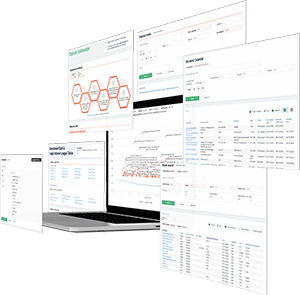

full data on over 900 000 bonds, 80 000 stocks, 116 000 ETF & Funds; powerful bond screener; over 350 pricing sources among stock exchanges & OTC market; ratings & financial reports; user-friendly interface; available anywhere via Website, Excel Add-in and Mobile app.
Register








 Bond Screener
Weekly review: Domestic bond issues in focus
Local currency. Ukraine\'s currency, which has traditionally been supported by interventions by the NBU, and is continuing to be sustained by these interventions, and now, allegedly by a state-owned bank selling US dollars. Over the past week, however, levels of the US dollar of above 8.10 hryvnia came down towards 8.02, the NBU\'s intervention level. In our view, pressure on the UAH will stay intact over these coming few weeks, as the global macro environment remains shaky, and domestic data is unconvincing in terms of providing evidence that the economy is back on the path of a solid recovery. Scarce domestic liquidity and continued NBU interventions should help maintain a kind of status quo in the local FX market, over the next few weeks, i.e., with the USD/UAH rate barely changed.
Domestic bond market. Banking sector liquidity continued its decline last week, hitting the trough level of this year. With a decrease in debt repayments after last week\'s debt repayment, followed by this Wednesday\'s repayment by the MoF of UAH1.86bn, with a partial refinancing, broader banking sector liquidity will fall once more without the NBU\'s support.
However, low liquidity is likely not a detriment to the new issues: The Ukrainian agency for refinancing mortgage loans and the City of Kyiv will begin their bonds placement in June, but while the City of Kyiv has already registered its bonds, the agency has just announced its issue.
Eurobond market. Ukrainian Eurobonds were more stable than at the beginning of the month, but remained still too high, at about 9.5%, with spreads below 900bp, a level that appears to be too high, but is a result of the instability in Europe before the elections in Greece and the unpredictability of Ukrainian new issues and Eurobonds redemption this month. If the MoF clarifies the possibility of making debt repayments and plans for the Eurobonds issue for the VTB Capital, this could cause a decline in the Ukrainian Eurobonds YTM.
Read full comment in the attachment (25 pages, PDF file 1897KB)