









Explore the most comprehensive database
1 000 000
bonds
80 234
stocks
167 970
ETF & Funds
70 000
indices
Track your portfolio in the most efficient way

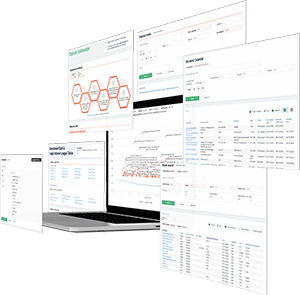

full data on over 900 000 bonds, 80 000 stocks, 116 000 ETF & Funds; powerful bond screener; over 350 pricing sources among stock exchanges & OTC market; ratings & financial reports; user-friendly interface; available anywhere via Website, Excel Add-in and Mobile app.
Register








 Bond Screener
Q1\'12 Economic Outlook Update: “Is this time different? Probably not”
We are still cautious on this year developments, and recent political and economic events in Ukraine have not changed our outlook for 2012 significantly. On the political front, the government’s inclination towards power consolidation has increased drastically ahead of autumn elections, while approval ratings have fallen and social discontent persists. Meanwhile, external conditions have already placed growth on a weaker footing and heightened pre-existing vulnerabilities. The key issue for Ukraine in 2012 is the ability to manage the ‘twin deficit’ problem (similar to 2008) in light of obvious funding constraints and unfavorable global economic environment.
• Our political analysis revealed a further increase in probability of the ‘Power centralization’ scenario. Most observers say there are signs of a shift towards authoritarian rule, as the ruling elite consolidates power and tightens the grip on key political institutions ahead of parliamentary elections. These processes have occurred against the backdrop of faltered reforms, growing social discontent and falling ratings, which also induces us to see an increased probability for an unfolding of a ‘Social unrest’ scenario…
• We still see a more likely unfolding of our “no shocks” scenario for Ukraine’s economy. We expect domestic-oriented industries (trade, transportation) to take the relay in growth stimulation under this scenario with a 3.8% real GDP growth in 2012. However, in case of an adverse external shock, we expect weaknesses across all industries, which should translate into a mere 0.9% growth…
• Ukraine’s external balance remains at the forefront of our concerns owing to widening C/A deficit and unstable capital flows of largely short-term nature. We do not support the argument that Ukraine maintains adequate foreign currency buffers as basic metrics suggest the position is weaker than on the eve of the 2008 crisis. In this context, external financing becomes a necessity rather than optionality…
• We still see red flags in inflation dynamics in 2012. Weather conditions have set the stage for a rise in food prices, while conflicts in the MENA countries are likely to keep oil prices elevated with possible second-round effects still to come. Monetary financing of budget deficit also remains an option…
• We continue to see setbacks in fiscal performance in 2012 as weaker growth environment and funding constraints increase the likelihood of a reversal in the recent trends under both scenarios, while the president’s populist ‘social initiatives’ should also contribute to an overshoot in the budget deficit…
See enclosed file for further details.
For information requests please contact Alexander Vedeneyev CFA, Head of Research, e-mail: [email protected], tel: +38 044 392 2030