









Explore the most comprehensive database
1 000 000
bonds
80 234
stocks
167 970
ETF & Funds
70 000
indices
Track your portfolio in the most efficient way

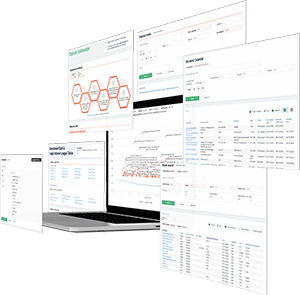

full data on over 900 000 bonds, 80 000 stocks, 116 000 ETF & Funds; powerful bond screener; over 350 pricing sources among stock exchanges & OTC market; ratings & financial reports; user-friendly interface; available anywhere via Website, Excel Add-in and Mobile app.
Register





 Bond Screener
Natural gas talks yield no progress; budget law goes to Parliament; gov.t bond auction results
After spending most of the night Tuesday night talking with Russian President Medvedev and PM Putin in the suburban Moscow residence, Ukraine\'s President Yanukovych and PM Azarov came back to Kiev without any concrete answers for the public with regard to the details of an agreement, which was discussed overnight.
Mr Yanukovych appeared publicly yesterday at the pre-scheduled press-conference with reporters to mark the end of 2011. Naturally, questions were thrown at him regarding the natural gas talks with the Russian leadership. In response, he said the following, providing some hints of details of the agreement.
First, the Ukrainian side is demanding the European price level to be written into the agreement, which, together with a US$100 discount agreed upon by the two sides in the city of Kharkiv in 2010 (known as the Kharkiv deal) would yield a US$250 per 1,000 m3 price. Rightfully, President Yanukovych referred to the current agreement, which yields a US$515 price without the discount and US$414 with the discount. At the same, time he refrained from making a forecast as to which price level Ukraine would eventually obtain.
Second, the Ukrainian side proposes that the Russians create an international consortium to manage and modernise the Ukrainian transit pipeline system (which includes underground storage facilities). Such an international consortium would consist of Ukraine, Russia, and some Western power (e.g., Germany, US). This goes, naturally, contrary with the wishes of the Russian side, which would gratefully take it all (in a perfect world without any other part involved), while in actuality, Russia apparently does object to third-party participation in the consortium.
Third, the president firmly rejected an IMF-advised policy of increasing the regulated tariff on households. He said that Ukraine\'s public would not bear such an increase. Hence, this move is not in the cards. If Mr Yanukovych wanted to make a good impression on voters and win some sympathizers, he probably succeeding a bit. However, this must make private creditors unhappy, as the fiscal credibility of the Ukraine\'s authorities is again at its bottom (the CDS on 5-year sovereign debt was down 2bp to 851bp yesterday).
Read full comment in the attachment (12 pages, PDF file 1187KB)