









Explore the most comprehensive database
1 000 000
bonds
80 234
stocks
167 970
ETF & Funds
70 000
indices
Track your portfolio in the most efficient way

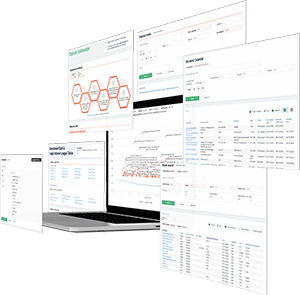

full data on over 900 000 bonds, 80 000 stocks, 116 000 ETF & Funds; powerful bond screener; over 350 pricing sources among stock exchanges & OTC market; ratings & financial reports; user-friendly interface; available anywhere via Website, Excel Add-in and Mobile app.
Register








 Bond Screener
Strategies and policies: Strategic portfolio review
Executive summary
In line with the strategic portfolio management approach adopted by the Bank in 1999, the Strategic Portfolio Review (SPR) contains a retrospective examination of key strategic portfolio development trends from an integrated perspective covering transition, operational, risk and financial factors.
The SPR is a dynamic document shaped by the changing portfolio development and management challenges the Bank confronts in implementing its mandate. For 2005, the SPR examines in detail the following topics which address features of particular relevance arising from an assessment of 2005 results:
The analysis of undrawn commitments provides a basis to assess future disbursement potential;
The equity portfolio financial return was a key feature of the Bank’s performance in 2005 and the structure of unrealised gains as at end 2005 provides an indication, subject to future volatility, of the potential for future realised gains; and
The high level of prepayments has been placing pressure on portfolio growth over the past two years.
Key points emerging from the 2005 Strategic Portfolio Review are:
The transition impact potential of projects signed in 2005 remained at a high level of 85 per cent of projects being rated ‘good’ or ‘excellent’ which is equal to the level achieved in 2004. On a portfolio basis, the Transition Impact Monitoring System (TIMS) shows that on a sample of 459 projects, there were 111 upgrades and 64 downgrades in the expected transition impact of the Bank’s portfolio with 54 per cent of projects ranked 4 or above in TIMS. The TIMS ratio is however under pressure due to the increasing number of projects rated ‘good potential/high risk’ as the Bank increases its activity in riskier business environments and as the TIMS rating of projects exiting the portfolio tends to be high.
The share of the portfolio in the early and intermediate transition countries and Russia continued to grow reaching 72% of the Bank’s portfolio at the planning rate at end 2005 in line with the strategic direction set in the second Capital Resources Review (BDS01-08 (Final)).
The non-sovereign loan portfolio increased by more than ?1.1 billion in 2005, and increase of 15 per cent over the end 2004 level, and accounts for the first time for more than half of the total portfolio.
The stock of impaired assets decreased further by 39 per cent during 2005 to ?410 million from ?410 million in 2004. As a result, the ratio of impaired assets to operating assets decreased from 4 per cent to 2.5 per cent, the lowest level since November 1996.
The weighted average margin of loan operating assets increased marginally from 2.17 per cent in 2004 to 2.21 per cent in 2005 with the non-sovereign loan operating assets margin rising to 2.7 per cent.
The analysis of undrawn commitments, equity portfolio structure and prepayments shows that:
The product and age composition of undrawn commitments indicates that there is a strong potential to increase disbursements from the levels achieved in 2005. The analysis shows that the growth of undrawn commitments and ratio was mostly driven by the timing of a large volume of signings in the fourth quarter of 2005. While the undrawn commitments base remains strong, the growth of the sovereign portfolio and of equity fund commitments combined with the portfolio shift to more complex operating environments will be affecting the disbursement rate.
In addition to the large realised gains achieved in 2005, there is a significant stock of unrealised gains in the Bank’s equity portfolio. While the value of this stock remains sensitive to market changes and volatility, the Bank will continue to focus on achieving realised gains, subject to transition impact considerations, while working to build value over the medium term through intensive investment monitoring across the equity portfolio. The geographic structure of potential future gains is shifting with the structure of equity operating assets as the value of equity assets as at end 2005 was assessed at ?1.85 billion in the early and intermediate transition countries compared to ?1.7 billion in the advanced transition countries.
The share of prepayments of the advanced transition countries decreased from 83% in 2004 to 45% in 2005 with the share of the early and intermediate transition countries rising from 8% to 42%. In light of current market conditions, prepayment pressure is expected to remain significant.