









Explore the most comprehensive database
1 000 000
bonds
80 234
stocks
167 970
ETF & Funds
70 000
indices
Track your portfolio in the most efficient way

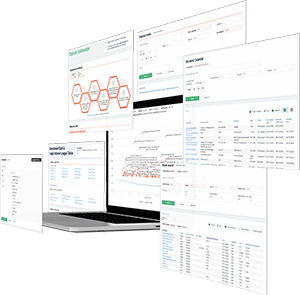

full data on over 900 000 bonds, 80 000 stocks, 116 000 ETF & Funds; powerful bond screener; over 350 pricing sources among stock exchanges & OTC market; ratings & financial reports; user-friendly interface; available anywhere via Website, Excel Add-in and Mobile app.
Register








 Bond Screener
Russian Fixed Income Daily
- US10Y in consolidation: downside risk
- MosReg-6 - one of the cheapest long papers
- RusAl borrowing USD1.5b to refinance debt...
FX and money market
Following the very volatile euro/dollar exchange rate, fluctuations of the rouble increased at the beginning of the week. While on Tuesday the rouble strengthened by ten kopecks appreciating to RBL/USD27.98, this morning it has fallen to RBL/USD27.03 as the dollar rebounded to USD/EUR1.2773 from yesterday’s USD/EUR1.283. Market players are having difficulty finding any clear trading ideas in the current market conditions, and as a result, choosing to build their positions very cautiously. It is likely that today’s scheduled US New home sales figures and Thursday’s US GDP releases could affect the euro/dollar performance, and in the coming days volatility in the markets will probably remain high. Today we see the rouble in the wide range of RBL/USD26.95–27.05.
Despite the tax payment period (Excises on 25 May, Profit tax on 28 May) the situation in the money market does not look so dramatic. This morning, overnight interest rates have risen to 3% from yesterday’s level of 2% and some rouble liquidity squeeze in the coming two weeks is possible.
Olga Golub, Moscow (7 495) 755 5176
Rouble bond market
On Tuesday, domestic bonds were in a corrective stance, which can be naturally explained by the recent strong weakness of the Russian equity market, as well as some yield increase in US Treasuries. On the other hand, the actual decline of prices of liquid rouble bonds was very modest at 5–20bp on average, which looked very impressive considering the much weaker parallel performance of Russian Eurobonds.
The spread of Russia’30 over US10Y is currently 128(+6)bp (very wide, with a compression potential of 35bp from an historical standpoint), while the spread of OFZ 46018 over Russia’30 is 51(-7)bp (wide in a medium-term perspective, our target for the spread is 0bp).
US10Y in consolidation
Ten-year Treasury notes are currently consolidating their gains of last week. Right now, US10Y is at 5.03%, down from 5.08% at yesterday’s intraday high.
We have mentioned before in our updates that the range of 5–5.2% currently represents the most probable area to look for US10Y in the nearest future. Today the benchmark rate is at the lower border of this range, implying that the prospects of US10Y are largely on the downside. On the other hand, this downside is also limited, as until the Fed target rate is raised once more to 5.25%, 5.2% in 10-year notes represents the point at which significant buying activity emerges.
However, the question of another rate hike on 29 June has still not been settled by the market—consensus expectations are somewhere between 5 and 5.25% based both on Fed funds futures and straight Bloomberg economists’ poll. A possible point at which some clarity on the topic may appear is the publication of the minutes of the 10 May FOMC meeting on 31 May.
Primary market day today
Today five primary placements are scheduled on MICEX for a total amount of RBL5.05bn. The majority of these placements are relatively small, although the auction for SibTel-7 is likely to draw significant attention.
The paper has a size of RBL2bn, three years to bullet maturity and semi-annual coupons. In our recent weekly update we estimated the fair YTM of SibTel-7 in the range of 8.7–8.85%. Sibirtelecom is rated B+ by Fitch.
Secondary trading
Price changes of high-grade rouble bonds: OFZ 46020 -13bp, Moscow-39 -9bp, Moscow-44 +0bp, FSK UES-2 -18bp, Gazprom-4 -6bp, Lukoil +2bp, RZhD-6 -3bp.
Second-tier papers: MosReg-6 -4bp, CenTel-4 -6bp, Megafon-3 -5bp, TMK-3 +7bp, VolgaTel-3 -13bp, WBD-2 +7bp.
RusAl-3 was quoted on Tuesday at 7.73% YTM for 29 months. We estimate the long-term fair point for the paper to be 7.5%. Apart from simply having an attractive yield, we believe that RusAl-3 promises additional upside due to the expected transparency increase in 2006–2007 that Russian Aluminium promised investors in 2005. The company recently announced it was planning to borrow as much as USD1.5bn from a syndicate of Western banks in tranches of 5–7 years, but as the new funds will be used to refinance existing debt this should not cause a significant debt burden increase.
MosReg-6, a bond of the Moscow region that we previously recommended for buying, was stationary on Tuesday and is now trading at 7.46% to maturity in five years. We continue to estimate the fair YTM of MosReg-6 at 7.25%, which makes this paper one of the most undervalued long rouble bonds. Moscow region is rated BB/Ba3 by S&P/Moody’s.
TMK-2, which we have frequently recommended for buying, recently shifted up in price reducing its yield to 7.65% for 10 months against 7.9–8% previously. In our special research piece dedicated to TMK, we estimated the fair range for the YTP of TMK-2 at 7.5–7.75%, so currently the paper is already there. As a result, we advise to stop accumulating it, but to continue holding on position.
On the other hand, yields of the other two TMK bonds are still above our expectations: TMK-1 is trading at 7.51% for five months (our assessment of the fair range is 7.25–7.5%), TMK-3 is at 8.19% (our view is 7.75–8%). Therefore, we continue to recommend buyers to pay attention to these issues.
RZhD-6, one of the longest bonds of Russian Railways (RR), retains attractiveness relative to other papers on the RR curve. Currently RZhD-6 is at 7.35% to maturity in 54 months, while the fair yield of RZhD-6 can be estimated at 7.2–7.25%. As a result, the speculative upside of the paper is limited within 50bp, but if exposure to quasi-sovereign risk is necessary, RZhD-6 is one of the best candidates. RR is rated BBB-/Baa2/BBB by S&P/Moody’s/Fitch.
Impex-3, a bond of Impexbank recently acquired by Raiffeisen, was quoted at about 8% to put in 12 months. Due to the acquisition, the bank has been upgraded by Fitch and Moody’s to investment grade rating BBB-/Baa2, so now it continues to be above its fair yield, which is located somewhere in the range of 7–7.5%. We definitely recommend accumulating Impex-3 for passively managed portfolios.
Short-term market view
The rouble bond market retains significant attractiveness relative to dollar Eurobonds due to the expected further appreciation of the rouble. We believe that the spread between OFZ 46018 and Russia’30 may shrink to zero by the end of 2006. In addition, the spread between Russia’30 and US10Y is currently extremely wide and does not incorporate the further expected Paris club debt prepayment. As a result, these two wide spreads create a good safety cushion for the rouble market, which should drive the yields of rouble bonds down, or at least leave them intact in case of a sharp fall of US Treasuries.
In the nearest perspective, the local market will find itself between the potentially falling US10Y and excess rouble liquidity at the beginning of June, so for the moment our recommendation for long rouble bonds remains a Hold.
Dmitry Dudkin, Moscow (7 495) 755 5480
April 2006 Macroeconomic performance – acceleration
Economic performance was solid in January–April. As expected, economic growth accelerated in April
Yesterday, the FSSS released its macroeconomic figures for April 2006, which were positive as expected. Consumer demand expansion remained solid, oil prices were very favourable, and investment demand spiked dramatically. We see potential for further acceleration and expect continuing positive figures in the coming months.
According to the Economy Ministry, GDP growth accelerated to 6.5% in April upgrading the cumulative figure to 5.1% (YoY) in January–April. This strengthens our optimism regarding economic performance in 2006 as a whole – currently we maintain our forecast at 6.3% (YoY) in 2006.
The sharpest spike in April was in fixed-capital investment growth, which amounted to 10.8% (YoY), resulting in 7.4% (YoY) in January–April vs. 10.5% (YoY) in 2005, a serious rebound after the slowdown in January–February. In the coming months, we expect investment growth to remain impressive with two-digit figures, and maintain our forecast at 9.5% for 2006 as a whole. Consumption demand also remained strong, as real disposable income growth remains sufficiently high at 6.4% (YoY) Apr2006 with real wage growth of 12.6% (YoY).
Although the fight against poverty remains one of the primary targets of the government, the latter can be proud of a degree of success in this area for 2004–5. Extra oil revenues redistributed via the federal budget significantly helped to boost the incomes of the poor, with the average monthly wage reaching RBL9963, or USD370 – closer and closer to the average CEE level. As a result, retail trade turnover rose an impressive 10.6% (YoY) in April 2006, which is higher than expected. This trend confirms that domestic demand remains one of the main factors stimulating economic growth. It is also important to state that in April 2006 the unemployment rate remained relatively low and even declined by 0.2pp to 7.5%, and is likely to further drop seasonally in summer.
PPI slowed down significantly to 0.6% (MoM), resulting in a slowdown of annual wholesale inflation to 13.2% (YoY), or 14.9% annual average. This slowdown was expected as the increase in natural monopoly tariffs at the beginning of the year had been fully priced in earlier. Nevertheless, wholesale inflation is rather volatile being pushed up by global commodity prices. We maintain our forecast for wholesale inflation at 17% for 2006 as a whole.
YoY, % April 2006 Jan-Apr 2006 2006F
GDP (YoY) 6.5 5.1 6.3
Industrial output 4.8 3.5 5.3
Fixed Capital Investment 10.8 7.4 9.5
Retail turnover 10.6 10.3 10.0
Real Disposable Income 6.4 7.7 9.0
Real wages 12.6 10.9 10.0
PPI (YoY)-average 13.2 14.9 17.0
CPI (YoY) 9.9 10.6 10.0
_
Sources: FSSS, MinEcon, ING
Investment implications: April’s acceleration looks encouraging. Retail turnover performance and real wage growth were very supportive for consumer demand, which was essential for economic growth in January–April 2006. The spike in fixed capital investment growth is likely to be sustained and we remain optimistic regarding economic performance in 2006 and beyond.
Julia Tsepliaeva, Moscow (7 495) 755 5489