









Explore the most comprehensive database
1 000 000
bonds
80 234
stocks
167 970
ETF & Funds
70 000
indices
Track your portfolio in the most efficient way

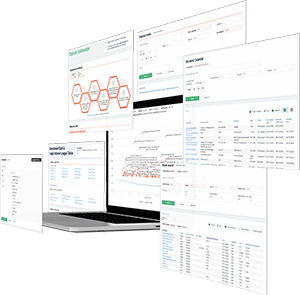

full data on over 900 000 bonds, 80 000 stocks, 116 000 ETF & Funds; powerful bond screener; over 350 pricing sources among stock exchanges & OTC market; ratings & financial reports; user-friendly interface; available anywhere via Website, Excel Add-in and Mobile app.
Register








 Bond Screener
Daily Currency Briefing: The action is elsewhere
Topics:
EM risks and commodity prices play a major role for G10 currencies
Riksbank’s licence to intervene – and the associated minutes
CZK: Board member Rusnok says FX cap to stay until inflation overshoots
S&P downgrade and FX conversion plan trigger zloty sell-off
RRR on CNH - Currency stability is the key for now
G10 FX Research
In the US markets will remain closed today as a result of the Martin Luther King Day. The calendars of the other G10 countries are also quite empty. However, that does not necessarily mean that we face a boring day. At present the action is in the Emerging Markets and the commodity markets anyway. That has notable effects on the G10 exchange rates as well. In particular the commodity currencies NZD, AUD and CAD have recorded notable losses since the start of the year. AUD and NZD are under pressure on two fronts: first of all the concerns about the Chinese economy and its financial stability and on the other side continuous new lows in commodity prices, in particular crude oil. As a result the market is massively revaluating its rate expectations which of course is leading to a revaluation of the currencies. However, one should not take too one-dimensional an approach in this context. The Bank of Canada and the Reserve Bank of Australia have both recently signalled a wait and see approach. It is unlikely to have much of an effect if interest rates were to be cut in a panic move now, as central banks already cut interest rates last year. The structural changes they are aiming for will take its time and are unlikely to be speeded up by further rate cuts. At the same time the central banks are concerned about increasing private debt levels and the risk of bubbles forming on the property market. Lower interest rates would fuel both these developments. In our view the best strategy would be to keep one’s options open and to wait and see how things develop – and what exactly the effects on the local economy are. That does not mean a spectacular recovery of the currencies, but nor does it mean that the collapse will continue for much longer.
SEK: Since its extraordinary meeting on 4th January 2016 Riksbank has a licence to intervene. Today the minutes of that meeting will be published. The contents are unlikely to have a direct effect on exchange rates, as the fundamental view of the central bankers is unlikely to have changed since the last ordinary meeting on 15th December 2015. What will be interesting to see will be whether Riksbank manages to strike a balance between its previous view that krona will appreciate and the willingness voiced on 4th January to intervene on the FX market in case of further krona appreciation. This contradiction has made it difficult for the FX market for a while now to understand Riksbank’s strategy. It is likely to mean that the market will continue to test where exactly Riksbank’s pain threshold is located. In our view two things are clear at the moment: (1) at present the threshold is located at approx. 9.15 in EUR-SEK and (2) even if Riksbank’s sometimes confusing communication strategy means that every so often it makes its own life difficult it has proven often enough during the course of last year that if in doubt Riksbank will be there to do everything to prevent a renewed slip into deflation (for example fuelled by SEK appreciation). That is unlikely to change in 2016.
Emerging-Market-Research
CZK: In a significant remark, future CNB governor candidate, Jiri Rusnok, mentioned that the CB must wait for inflation to actually overshoot its 2% target before it ends its FX cap. He added that current inflation trends makes it possible that exit will be later than the planned end-2016. The latest CNB inflation forecast portrays inflation reaching target by Q1 2017, which is consistent with the guidance that CNB would unwind the cap in early 2017. Nevertheless, we think that such inflation forecasts may have to be lowered this quarter: as chart 2 shows, imported deflation is only intensifying; the introduction of the FX cap had a temporary positive effect, but the older deflationary trend has resumed. Our own forecast is for Czech inflation to remain below 2% until late-2017. The likelihood of the FX cap being extended further, perhaps to end-2017, is increasing.
PLN: The zloty sold off sharply at the end of last week from a combination of developments: First, rating agency S&P surprisingly reduced Poland’s sovereign foreign currency credit rating from A- to BBB+ and lowered the outlook to negative. This was a huge surprise because usually a rating agency would not lower the rating without first lowering the outlook to negative (S&P’s outlook had been stable). The surprise move reflects the extreme uncertainty latest policy changes in Poland has created in the markets. And this uncertainty is here to stay. Secondly, President Andrzej Duda unveiled a CHF loan conversion plan, which would prove costly for banks: the proposal is not specific about many key issues; nevertheless, a provisional estimate would be c.PLN 30bn for the banking sector, spread out over the remaining life of CHF mortgages. According to the proposal, 1) FX borrowers would be able to convert their CHF loans to PLN using a 'fair exchange rate' which will be calculated on an individual basis on the principle that the borrower should be left neither better off nor worse off than if they had borrowed in local currency. Banks will not be able to increase collateral or change duration of the resulting PLN loan. 2) Banks would also reimburse bid-offer spreads which they had historically charged on FX loans. 3) After loan conversion, borrowers can surrender the property instead of repaying the loan. The proposal includes tax deductability of the losses, but the clause on this is unclear on how much in total banks can offset over the years. The coming days will hopefully bring more clarity about the reaction of various policymakers and institutions towards this legislation and what kind of burden-sharing we may finally expect.
CNY: China’s central bank announced this morning that it would impose required reserve ratio (RRR) on yuan deposits of offshore participant banks on the mainland. The rule will take effect from next Monday (January 25). The reserve ratio was previously at zero on offshore banks’ yuan deposits in the mainland, but now will be subject to the same ratio as applicable to Chinese banks. Right now, outstanding CNH deposits are around 1.3trn, and we estimate that around 300bn CNH deposits could be affected.
We saw some sort of unwinding of short CNH positions in the morning trading session. However, the impact on overall liquidity in CNH market remains uncertain: while the new rule could tighten the liquidity in CNH market in the first place, the unwinding of short CNH positions will reduce the demand for CNH as well. All in all, it appears that the Chinese authorities want to dampen the speculative flows that bet on a fast depreciation of its currency.