









Explore the most comprehensive database
1 000 000
bonds
80 234
stocks
167 970
ETF & Funds
70 000
indices
Track your portfolio in the most efficient way

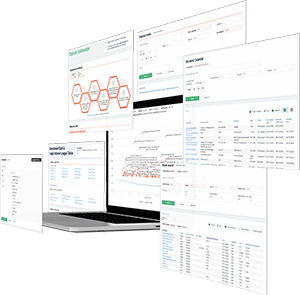

full data on over 900 000 bonds, 80 000 stocks, 116 000 ETF & Funds; powerful bond screener; over 350 pricing sources among stock exchanges & OTC market; ratings & financial reports; user-friendly interface; available anywhere via Website, Excel Add-in and Mobile app.
Register








 Bond Screener
Daily Currency Briefing: A farewell is not forever
Abandonment of EUR-CHF minimum exchange rate – one year anniversary
Full data calendar in USD
Update of our GBP forecasts
Zloty sells off sharply as government prepares FX conversion bill
HUF: December inflation data support our rate cut view
China’s credit growth looks fine; capital outflows remain
G10 FX Research
CHF: It is one year to the day that the Swiss National Bank broke its promise to defend the minimum exchange rate of 1.20 in EUR-CHF under any circumstances. And one year on we have to say: it did not turn out to be as bad as feared (in particular by us). The end of the minimum exchange rate was not the end of the world. Neither the end of the Swiss export economy nor of the Swiss franc. And at first glance things look quite promising: since early August EUR-CHF has been trading in a relatively stable manner between 1.0750 and 1.10 (currently around 1.0930) and the rate of inflation does seem to have bottomed for the time being. However, the real test will only begin now, as inflation will now have to rise as expected by the SNB. Also the effect for companies and the labour market will only emerge gradually. The Swiss Federal Council has just extended the concept of reduced working hours, which was introduced in reaction to the strong franc at the end of January 2015. The real economy is far from having shaken off the franc shock. The minimum exchange rate and the way it ended had effects that will continue to affect the SNB’s monetary policy forever. At the most inopportune moment the market may remember 15th January 2015. Nobody ever leaves forever and the same applies for the minimum exchange rate.
USD: The decline in inflation expectations associated with the renewed declines in crude oil prices was worrying. As inflation expectations react to the oil price one may be more concerned to “look through” to see through the changes of the oil price. That sounds rather dovish – and is even more surprising as this comment came from the renowned hawk and President of the St. Louis Fed James Bullard. As a result a rate step in March does not seem a fait accompli to Bullard. That would require further information. Of course – inflation remains the most pressing issue. But the better the US economy does the more likely it is that the Fed central bankers will be willing to see through the inflation rate put under pressure mainly as a result of the oil price. So today things are going to get interesting again for USD. Both real economic (retail sales, industrial production) as well as sentiment indicators (University of Michigan) are on the agenda. As regards the latter attention should focus on inflation expectations following Bullard’s comments yesterday.
GBP: Despite the falling oil price Ian McCafferty once again voted for a rate hike at yesterday’s Bank of England (BoE) monetary policy meeting and is thus proving himself to be a very resilient hawk. However, Sterling was unable to benefit. The publication of the rate decision and the minutes to go with it meant that something that had already been clear has now become official: the BoE will have to revise its inflation outlook downwards in February.
We have adjusted our outlook a little as well. We now expect a BoE rate hike in Q4 – as a weak Sterling is likely to support the economy and limit downside pressure on inflation. As of the summer GBP is therefore likely to appreciate a little again as soon as the market adjusts its pessimistic rate outlook. At present the market only expects the first rate hike for 2017.
Emerging-Market-Research
PLN: The zloty sold off sharply yesterday as President Andrzej Duda's office announced that a revised FX mortgage loan conversion bill will be unveiled today at 11:30 CET. This is not a surprise -- nor is this version of the legislation likely be tougher on banks than PiS' initial proposals. Hence, yesterday's zloty move probably just reflects general risk aversion because a loss-bearing policy legislation is about to become concrete. An impact assessment of the law itself does not make sense until we have had a chance to examine the details. The general principle is likely to be that the resulting loss from this conversion scheme, plus the new bank tax, would together not exceed the loss from direct loan conversion at historical exchange rates. This consideration will be balanced by also the principle that neither zloty-borrowers nor bailed-out FX borrowers should be left better off by this law. We could imagine impact numbers in the range of PLN 10bn losses for banks to be spread over two or three years.
HUF: Further to our comments yesterday about MNB's signalling of upcoming monetary easing, we saw the publication of December inflation data, which were in line with expectations at the headline level, but softer at the underlying level. MNB's underlying inflation measures all softened compared to the previous two months, with the key tax-adjusted core inflation measure down to 1.1%. In anticipation of just such readings, MNB economists remarked earlier this week that their projections may have to be lowered again in the Q1 Inflation Report -- in the last Inflation Report, MNB projected core inflation to accelerate from 1.3% in 2015 to 2.4% in 2016. Latest data will raise huge question marks about this projection, and in our view, supports the idea that the benchmark rate is likely to be cut again this year; we forecast the rate to be cut from 1.35% to 1%.
CNY: China’s M2 grew 13.3% y/y for the whole year of 2015, up from 12.2% in 2014, reflecting an accommodative monetary policy bias. While new loans came in lower than expected, at CNY597.8bn in December (November: CNY708.9bn), the aggregate financing was quite strong at CNY1.82trn in December, up from November’s CNY1.02trn.
The biggest increment in aggregate financing came from the corporate financing via bond and stock markets. It appears to us commercial banks have fewer incentives to provide loans to corporates especially due to credit concerns over SMEs, but turn to capital markets to finance the corporate. This hints to an ongoing structural change in China’s financing system.
Looking ahead, we think that the monetary policy will remain accommodative in the coming year. While further cuts in policy rates seems inevitable, China’s central bank needs to take into account the risk of capital outflows which could be triggered by narrowing rate differentials between CNY and USD. That said, it would be more feasible for China to turn to RRR cuts to counter the economic slowdown. We thus think PBoC will not cut the policy rates as aggressively as they did last year. We maintain our forecast that the central bank will cut the policy rate only by 25bps in Q1, but lower the RRR by 150-200bps for the whole year of 2016.