









Explore the most comprehensive database
1 000 000
bonds
80 234
stocks
167 970
ETF & Funds
70 000
indices
Track your portfolio in the most efficient way

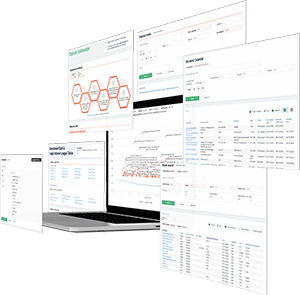

full data on over 900 000 bonds, 80 000 stocks, 116 000 ETF & Funds; powerful bond screener; over 350 pricing sources among stock exchanges & OTC market; ratings & financial reports; user-friendly interface; available anywhere via Website, Excel Add-in and Mobile app.
Register








 Bond Screener
Daily Currency Briefing
Daily Currency Briefing
Let the games begin
Topics:
Riksbank and SNB under pressure to act
Real economic US data of secondary importance
RBA continues to chill as expected
RUB: outlook for Q4
Chinese PMIs remain weak
G10 FX Research
EUR, SEK, CHF: The EUR depreciated on a broad basis yesterday. This was felt amongst others by EUR-CHF and EUR-SEK which in view of the inflation rates in their countries will not exactly please the central banks concerned. And thus the games begin: Who can with-stand the EUR’s depreciation pressure created by the ECB who has signalled further monetary policy easing?
Both the Swiss National Bank (SNB) and Riksbank have already positioned themselves. Riksbank has been underlining for a while that it too is in a position to extend its bond pur-chasing programme further, lower interest rates or to intervene directly on the market against a krona appreciating at excessive speed. To date it has proved its drive very impressively and has even called extraordinary meetings to agree further expansionary measures to weaken the krona. I have no doubt that it will not simply accept krona appreciation without putting up any resistance this time round. As a result I do not agree with all those analysts who following yesterday’s surprisingly strong GDP data see no need for Riksbank to act. Even though the Swedish economy is indeed growing quite well at present that has failed to help inflation so far. The latter remains close to zero. That is one of the reasons why Riksbank is focussing on the exchange rate. It knows: to ensure that inflation does not deteriorate any further it is essential to ensure that the krona does not appreciate notably. And I can imagine that the appreciation of the krona seen since the beginning of the month has already reached Riksbank’s tolerance levels.
The SNB too has already flexed its muscles. The jump in EUR-CHF at the end of last week suggests strongly that it intervened on the FX market (please also refer to our FX Hotspot: SNB’s muscle flexing dated 27th Nov). Almost like an advance warning to all FX traders who are banking on a slide in EUR-CHF on Thursday. I do not believe that the SNB will remain inactive in this instance either. It is even very likely that it will immediately try and prevent any downmoves in EUR-CHF with the help of interventions. At first glance that may well work. However, as it already demonstrated at the beginning of the year in a very impressive manner: it will not play this game indefinitely.
USD: Was the Chicago PMI a bad sign for the nationwide PMI (ISM) today? Following the relatively mixed regional PMIs I certainly would not bet on a high number. However, real economic data has become increasingly insignificant for the USD exchange rates anyways. Certainly as long as they do not point towards a significant weakening of the economy, which we do not expect. Instead the Fed is mainly waiting for inflation to rise, as it too is affected by the global phenomenon of strong economic growth and comparatively low inflation. It still has hopes that the strong labour market will soon be reflected in higher wages and therefore higher consumer prices. Only once this becomes reflected in price data will the majority of market participants be convinced and thus possibly rethink its currently pessimistic rate expectations. And that would be when we expect to see the next major push for USD.
AUD: As announced by its governor Glenn Stevens the Reserve Bank of Australia (RBA) kept its cool this morning and left its key rate unchanged at 2%. Even its statement remained almost unchanged compared with that of the last meeting. It pointed out the strong fall in investments in the mining sector but noted that irrespective of this the economy was developing in a robust manner. As a result AUD-USD has been appreciating this morning. Even if this was probably not what the RBA intended, after all it repeatedly referred to the exchange rate and its essential role for the economy over the past year. However, it intends to wait, wait for the Fed that is, and hope that the US central bank will keep a lid on AUD-USD when it starts to hike interest rates.
Emerging-Market-Research
RUB: The seasonally adjusted data for economic growth in Q3 has not yet been published. But it seems to be emerging that the catastrophic development of the first half has been ended. The PMI for the manufacturing sector due to day will allow the market a glimpse of Q4. The expectation is for a further stabilisation. Even though the analysts expect a fall of 0.2 points to 50.0 points in November, but that would mean that the PMI is well above the levels seen during the first half. As was the case in Q3 the economy should not have collapsed further in Q4 without recovering notably though. The government has little scope on the fiscal side to change that. The data on the Sovereign Wealth Fund out today is likely to confirm that once again, as the government used the fund recently to balance its budget deficit. However, soon the fund will have been used up. The Finance Minister himself had recently pointed that out. That is not good news for the ruble, but at least the oil price did not come under further pressure yesterday. The latter remains the most important driver for the ruble. However, over the last days even compared to the oil price movement the RUB showed relative weakness. Concerns are mounting about deteriorating trade relations to Turkey. However, the oil price will remain the main driver. As a result the ruble market too is waiting for the OPEC meeting on Friday.
CNY: China’s manufacturing PMI hit three year low, at 49.6 in November, compared with 49.8 in the prior month, reflecting a painful deleveraging process in manufacturing sector. By category, the softness is almost across the board, output index declined by 0.3pt to 51.9, new orders and new export orders fell by 0.5pt and 1.0pt to 49.8 and 46.4 respectively. Input prices dropped sharply by 3.3pt to 41.1, as commodity prices plunged in November. In addition, the private Caixin PMI came in at 48.6 in November, up from 48.3 in the prior month. While we saw continued improvement in Caixin PMI in the past two months, it is still well below the trend level.
All in all, China’s manufacturing sector remains sluggish due to property slowdown. While property prices are turning around led by first-tier cities, the housing investment continues to moderate, reflecting a significant property inventory overhang in the economy.