









Explore the most comprehensive database
1 000 000
bonds
80 234
stocks
167 970
ETF & Funds
70 000
indices
Track your portfolio in the most efficient way

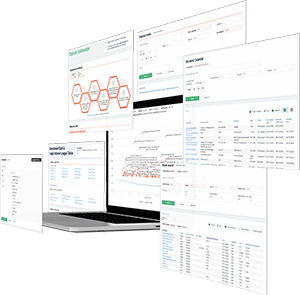

full data on over 900 000 bonds, 80 000 stocks, 116 000 ETF & Funds; powerful bond screener; over 350 pricing sources among stock exchanges & OTC market; ratings & financial reports; user-friendly interface; available anywhere via Website, Excel Add-in and Mobile app.
Register








 Bond Screener
Asia Daily Update
** China: PBoC opens FX market for overseas central banks
** China: GIC sees upside in property prices in top-tier cities
** South Korea: Consumer confidence improved in Nov; department store sales trend upwards
** Thailand: BoT board member hints at need to focus on rate hike rather than more cuts
** Philippines: Q3 GDP firmer at 6.0% y/y from 5.8% in Q2
** Philippines: Commendable BSP policy; flexible PHP and stable rates despite strong growth, low inflation
North Asia:
CHINA: An initial group of overseas central banks and other institutions has been allowed to enter China's interbank foreign exchange market, PBoC said. Seven institutions including HKMA, RBA and the World Bank Trust Funds have completed registration with the China Foreign Exchange Trading System, a move which signals their official access to the market. They will be allowed to conduct RMB and foreign exchange trading of one or more traded forex products, including spots, forwards, swaps and options. This is another move from Chinese authorities to open more access to foreign investors, and is one of the key requirements for SDR’s inclusion of RMB. While more foreign institutions are allowed to get access to onshore market, CNY-CNH spread remains at an elevated level, which suggests that the cross-border arbitrage mechanism is not working efficiently.
- Home prices in Beijing and Shanghai, which have surged this year, have room to rise further as the inflow of residents bolsters demand in China’s biggest cities, said the head of real estate investments at Singapore’s sovereign wealth fund. Despite some short-term volatility, the long-term outlook for the China’s real estate market is solid given its growth prospects, Goh Kok Huat, president of GIC Pte’s real estate unit, said in an interview. Retail properties face consolidation in China’s cities as more consumers turn to online shopping, he said.
SOUTH Korea: Consumer confidence index rose to 106 in November, from 105 in the prior month. In the meantime, households’ inflation expectation for next 12 months unchanged at 2.5%. Separately, October's department store sales was firmer at 11.4% y/y vs 2.8% in September. This was boosted by the introduction of the two-week long "Korea Black Friday" shopping season. In general, while the external sector still faces strong headwinds, we still see that the domestic economy performed resiliently. We see that Bank of Korea will remain on hold on 10 Dec meeting.
South Asia/Southeast Asia:
THAILAND: Bank of Thailand (BoT) Monetary Policy Committee member Paiboon Kittisrikangwan said yesterday that the central bank will start raising interest rates gradually once the pace of economic recovery becomes clearer. This is due to concerns that an extended period of low interest rate could induce excessive speculative flows into stock and property markets, and thus pose risk to financial stability. Rates have been kept at record low of 1.5% following the 25bp cuts in March and April this year. For BoT, we only see the possibility of a 25bp rate hike in H2 2016. This is also premised on implementation of the government's spending plans to help kickstart domestic investment.
Paiboon’s comments suggest that BoT's rate cut cycle may be over. If anything, it highlights the nervousness among Asian central banks of the extraordinary period of record low interest rates and the volatility that may follow upon exit ie once the Fed begins to normalize rates. A number of central banks in Asian, including Singapore, HK, Malaysia, and the Philippines have implemented macroprudential measures to prevent excessive leverage and risk taking eg restricting the quantum of property and car loans. We could expect more comments along these lines from other officials to highlight the risks of Fed normalization for Asian corporates and borrowers.
PHILIPPINES: Q3 GDP released this morning picked up to 6% y/y from a revised 5.8% in Q2 and 5.4% in H1. The main drivers are 1) sustained strong consumer spending; 2) firm investment; 3) the services sector; and 4) an acceleration in government spending. This more than offset sluggish exports. This implies growth in the first three quarters of the year of 5.6% and this follows the relatively robust 5.9% for the same period last year. For 2015, we see growth around 5.8%, implying around 6.1% in H2 2015. This is coming off a strong 6.1% in 2014. This leaves the economy on track to be the second fastest growing economy in Southeast Asia after Vietnam, which recorded 6.5% growth in the first three quarters.
For USD-PHP, it eased back 0.1% yesterday to 47.11. On a year-to-date basis, PHP has been one of the more resilient Asian FX vs USD, down only 4.8%, and the only currencies that have held up better are TWD, CNY, and KRW which are down 2.7%, 2.9%, and 3.9% respectively. USD-PHP is at the upper end of this year’s range of 44.00-47.50. BSP has kept the policy range unchanged at 4% since September 2014. Even though inflation has fallen sharply since the peak of just under 5% y/y in August 2014 to just 0.4% in October 2015, BSP has resisted the option of cutting rates further. This is well below BSP’s target of 2-4%, mid-point at 3%.
This demonstrates a mature and sensible approach on BSP’s front. It has also implemented macroprudential measures to restrict credit in the property market to prevent excessive asset price appreciation. Instead of cutting rates, BSP has instead allowed the currency to weaken in line with 1) the rest of Asian currencies; and 2) amidst the stronger USD backdrop on Fed normalization. It has not taken an obstinate approach as for the likes of China for example, in maintaining a strong or stable FX, even though growth has help up rather well. Overall, BSP’s monetary policy management has been commendable. For USD-PHP, we continue to look for a supportive tone near term with a year-end target of 47.00.