









Explore the most comprehensive database
1 000 000
bonds
80 234
stocks
167 970
ETF & Funds
70 000
indices
Track your portfolio in the most efficient way

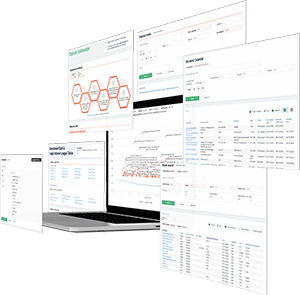
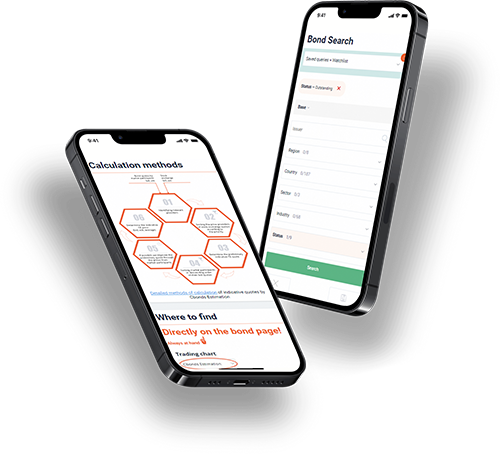
full data on over 900 000 bonds, 80 000 stocks, 116 000 ETF & Funds; powerful bond screener; over 350 pricing sources among stock exchanges & OTC market; ratings & financial reports; user-friendly interface; available anywhere via Website, Excel Add-in and Mobile app.
Register








 Bond Screener
US Fed: 25 bps hike and no end yet
Yesterday evening the US central bank (Fed) increased key interest rates (Fed Funds) by 25 bps for the thirteenth time in a row, bringing rates to 4.25 %, as was almost unanimously expected by the markets. The Fed repeated its statement that “some further measured policy firming is likely to be needed”, although the current monetary policy was no longer described as “accommodative” for the first time. Economic expansion was seen as “solid”, with core inflation comfortingly low, although upside risks to prices persisted. All in all a slightly more dovish rate outlook by the Fed, but at the same time a clear signal that the tightening cycle is not over yet.
Market reaction: The rate hike had been completely priced in by the market, but the slightly more dovish outlook given by the Fed (“accommodative” skipped) saw bond prices rising slightly, a small weakening of the USD and stronger stock markets.
Outlook: Given the still robust US economy we expect another 25 bps rate hike on 1 February, which will probably be the last of the cycle and will be followed by unchanged rates for the rest of 2006. Receding inflation and a slowing of the economy over the course of 2006 should make further hikes unnecessary (risk to the forecast: another 25 bps hike end of March). In the light of Fed Funds apparently reaching 4.5 % in Q1 06 (= 3m rates at 4.7 %) we expect bond yields to rise again into Q1 (with 10y yields reaching 4.8 % from currently 4.5 %), as economic growth should be still strong enough in Q1 to prevent the yield curve from inverting already that early. Therefore our recommendation for Q1 is to sell bonds (especially mid- to long-term maturities).
For EUR/USD we stick with our “Buy” recommendation as explained in yesterday’s “Focus FX”.