









Explore the most comprehensive database
1 000 000
bonds
80 234
stocks
167 970
ETF & Funds
70 000
indices
Track your portfolio in the most efficient way

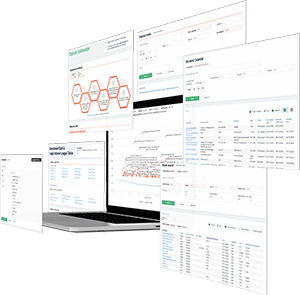

full data on over 900 000 bonds, 80 000 stocks, 116 000 ETF & Funds; powerful bond screener; over 350 pricing sources among stock exchanges & OTC market; ratings & financial reports; user-friendly interface; available anywhere via Website, Excel Add-in and Mobile app.
Register








 Bond Screener
Asia Daily Update
** China: PMI readings suggest a stabilization in the manufacturing sector
** China: PBoC to promote further CNY capital account convertibility in Shanghai FTZ
** South Korea: October’s exports shrank by 15.8%, fastest pace in six years
** Taiwan: Q3 GDP disappoints at -1% y/y; narrowly misses technical recession
** Taiwan: Government announces USD125mn of short term stimulus
** Singapore: Oct PMI to stay below 50-mark for fourth straight month
** Malaysia: 1MDB to wipe out debt; BNM to stay on hold at 3.25%
** Indonesia: Oct CPI to remain firm at around 6.2% y/y; Q3 GDP to stay at near six-year low of 4.8% y/y
** Thailand: Oct CPI to stay soft at -1% y/y; BoT to keep rates unchanged at 1.5%
North Asia
CHINA: China's official manufacturing PMI remained unchanged in October at 49.8. The private sector Caixin/Markit manufacturing PMI was firmer at 48.3 from 47.2 in September. As a whole, the readings suggest that the manufacturing sector has stabilized somewhat due to monetary policy easing.
Broadly, this suggests a "managed stabilization" as Chinese authorities intend to strike a balance among growth, reforms and market stabilization. To a large extent, it is also of China's interest to lower growth trajectory in a "managed stable" manner. Looking at the data in different real sectors, the power generation, steel production and housing sales all slowed in October. This suggests that the overall economy is still facing downward pressure. We could see another 50bps RRR cut before the end of this year, while PBoC will hold the rate cut as Fed is likely to hike in December.
- PBoC announced on Friday that it would proceed with capital account openness in Shanghai free trade zone (FTZ), including studying QFII2, cross-border security trading, futures business in FTZ, RMB-denominated bonds issued by foreign entity and full yuan full convertibility (within a quota). These policy initiatives are another important policy step towards a complete capital account liberalization. Clearly, it shows that China could accelerate financial market reform after the plenum this week.
Indeed, people have been quite disappointed with the developments in Shanghai FTZ so far as the financial experiments in FTZ are struggling due to regulatory environment. In our view, this is a brave move as the market volatilities are picking up amid economic slowdown, and this is also a brave response to market speculation that China will slow down capital account openness after the stock and FX market rout. If these experiments in Shanghai FTZ are implemented smoothly, more aggrieve policies will be rolled out as well, which will help facilitate RMB’s international status. While the global investors will benefit from China’s openness, Chinese residents will be able to access to global markets as well.
Over the short term, we see that the CNY exchange rate would be more volatile due to the openness of the capital account; nonetheless, a more flexible exchange rate regime is important for China to regain the monetary policy independence.
SOUTH KOREA: October’s trade data released yesterday continued to point to weakness in both exports and imports. Exports contracted at the fastest pace in six years by 15.8% vs- 8.3% in September. This was partly on the higher base effect last year. Imports was also soft at -16.6% from -21.8% in September. More pertinently, it has contracted by double digits for the 10th straight month. Subsequently, trade surplus narrowed to USD6.7bn from USD8.9bn in September.
- October’s inflation is due to be released tomorrow. It is expected to stay soft at 0.7% vs 0.6% in September.
TAIWAN: Q3 GDP released on Friday disappointed as it contracted by 1.01% y/y (market: -0.5%) vs +0.5% in Q2. The main drags were 1) weak exports which contracted by 2% vs -0.9% in Q2; and 2) softer consumption of 0.5% vs 1.5% in Q2. On a sequential basis, the economy eked out a 0.05% q/q gain from -1.7% in Q2. This means that Taiwan has narrowly avoided slipping into a technical recession, which is two consecutive quarter of negative growth.
- The government announced TWD4bn (USD125mn) short term stimulus package following the GDP release. The main aim is to spur consumption and lift growth. From 7-Nov to 29-Feb, subsidies for 4G handsets, energy-efficient home appliances and internet broadband will be rolled out. At the same time, incentives were also issued to promote domestic tourism. The government estimates that these measures will boost GDP by NT15.4bn (USD474mn). This implies a boost to overall GDP by around 0.1%.
South Asia/Southeast Asia
SINGAPORE: The key manufacturing PMI for October is due on 3 November. It is expected to remain below 50 for the 4th consecutive month, seen at 48.5 from 48.6 in September. The electronics PMI is also expected to remain weak at 48.4 from 48.5 previously. Overall, it highlights the weak external sector and sluggish global electronics demand. It should reinforce the anaemic growth backdrop, with 2015 growth seen towards the low 2% level
MALAYSIA: 1Malaysia Development Berhad (1MDB) President Arul Kanda disclosed on Saturday that it is in the process of wiping out its MYR42bn (USD9.8bn) of debt. This will be achieved via a mix of assets and debt sales. This comes as concerns over the finances of 1MDB have weighed on investors’ sentiment and exacerbated the fall in MYR. On a year-to-date basis, the MYR has fallen close to 20% against the USD, the most among Asian currencies.
- BNM is expected to stay on hold at 3.25% on Thursday. The last change was back in July 2014 when it was raised by 25bp. Given that risks to growth are tilted to the downside, any change in policy stance is likely to be an easing bias. However, BNM’s flexibility is hindered by 1) the need to guard MYR stability, and 2) upside risks to inflation due to the higher import costs arising from the pass-through from the weak MYR.
INDONESIA: October’s CPI will be released later at GMT 04:00. It is expected to remain firm at around 6.2% y/y vs 6.8% in September. We see inflation falling to around 3.5% by year-end, which will be within Bank Indonesia (BI) 3-5% target band. This is due to the high base effect arising from the energy subsidy cut in November. The moderation of inflation gives BI a window for a rate cut on 17-December. However, much will still be contingent on a stable global backdrop in the lead up to the US Fed meeting between 15 and 16-December.
- Q3 GDP will be released sometime on Thursday. It is likely to remain at a near six-year low of 4.8% y/y vs 4.7% in Q2. The main drags are seen from 1) weak investment growth; 2) slow government disbursement; and 3) sluggish exports. The only bright spot is likely to be resilience of private consumption. As a whole, we see downside risk to Bank Indonesia (BI)’s full year growth forecast of 4.9%. This is given the weakness in the external environment and still relatively tight monetary policy stance. Against this backdrop, the acceleration of government disbursement and the delivery of the recently announced economic stimulus package will be crucial in lifting growth.
THAILAND: October’s inflation will be released today. Headline inflation should contract for the 10th straight month by around -1% y/y vs -1.1% in September. Core inflation should hold at around 1%, unchanged from September. Downside risks for inflation are likely to persist in the coming months due to the modest economic recovery and lower oil prices.
- Bank of Thailand (BoT) holds its policy meeting on Wednesday. It is expected to stay unchanged at 1.5% despite the weak demand picture and benign inflation environment. This is due to 1) lingering concerns over elevated household debt to GDP which is around 86% of GDP at end-2014; and 2) limited pass through to investor given the weak investment sentiment. Nevertheless, BoT is expected to remain dovish and leave the door open for further cuts if needed. We also see BoT leaning towards a weaker currency to maintain loose monetary conditions and to boost exports.