









Explore the most comprehensive database
1 000 000
bonds
80 234
stocks
167 970
ETF & Funds
70 000
indices
Track your portfolio in the most efficient way

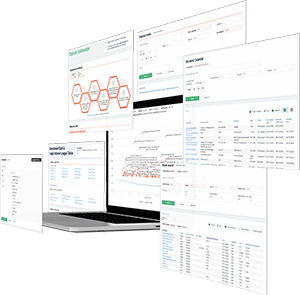

full data on over 900 000 bonds, 80 000 stocks, 116 000 ETF & Funds; powerful bond screener; over 350 pricing sources among stock exchanges & OTC market; ratings & financial reports; user-friendly interface; available anywhere via Website, Excel Add-in and Mobile app.
Register






 Bond Screener
Russian Fixed Income Weekly
- this week\'s primary placements
Rouble bond market: this week’s primary placements
Volga Telecom
Auction date: Tuesday, December 6, 2005.
The company is planning to place two bond issues, namely VolgaTel-2 and VolgaTel-3.
VolgaTel-2. Size: RBL3bn, term to maturity: 5 years, structure: semiannual coupons, principal amortization of 20% with each coupon payment starting after 3 years of floatation, 3-year put option. During its first 3 years the bond will be trading to the out option as a bullet paper. Approximate duration: 2.6 years.
VolgaTel-3. Size: RBL2.3bn, term to maturity: 5 years, structure: semiannual coupons, principal amortization of 20% with each coupon payment starting after 3 years of floatation, not putable. Approximate duration: 3.25 years.
Please, see our special report on VolgaTelecom distributed on Friday for the thorough discussion of the company’s credit quality.
Our pricing of the new bonds is based on the following reasoning.
First of all, on November, 24, an issue very similar to VolgaTel-2, UrSI-6 was placed with a YTP 8.34% for three years. From a credit standpoint, VolgaTelecom should trade at a discount to UralSvyazInform, ie, the YTP of VolgaTel-2 should be lower than 8.35%.
On the other hand, a neighbour bond of Megafon, Megafon-3 is now trading at 7.96% with a duration of 2.2 years. It is very unlikely that the new bond of VolgaTelecom will be placed below the Megafon-3 point, so the YTP of VolgaTelecom should exceed 8%.
Taking this in combination, we reach the conclusion that in the current market conditions, the fair range for the YTP of VolgaTel-2 is 8.05-8.2%.
Now, let us switch to the longer bond, VolgaTel-3, which will be priced to average life and (as mentioned) will have a duration of about 3.25 years.
Our lowest estimate for VolgaTel-2 was 8.05%, which is approximately 170bp above the OFZ curve. Performing a parallel shift of this spread from the duration of VolgaTel-2 to the duration of VolgaTel-3 we are seeing the lower border of the range for VolgaTel-3 at 8.25%. Correspondingly, the higher border of this range will be 8.4%, as the degree of uncertainty in pricing of both VolgaTel-2 and VolgaTel-3 is the same.
Therefore, we expect to see the YTM of VolgaTel-3 in the range of 8.25-8.4%.
Marta
Auction date: Wednesday, December 7, 2005.
Size: RBL1bn, term to maturity: 4 years, structure: bullet bond with semiannual coupons and a 1.5-year put option.
Marta is a holding company, which controls more than 20 different entities, their main business being retail trading in Russia, as well as wholesale trading in consumer electronics, developing commercial real estate, etc.
In its main business line, i.e. retail trading, the company is supported by REWE Group, in a joint venture with which it is developing a chain of supermarkets under BILLA brand (19 stores so far). Marta is also managing two separate supermarket chains Grossmart and Prodmak, totalling 34 stores, as well as a consumer electronics store chain named Technopolis (11 stores).
The main problem of the company is that is does not report consolidated financials, so what investors are left with is a separate reporting of each legal entity according to the Russian system. In such conditions the credit quality of the company becomes hardly controllable.
The new issue memorandum states some consolidated figures for Marta, which were not independently verified. According to them, Marta is expected in 2005 to have revenue of about US$125, now has about US$101m of debt, 58% of which being short-term. The Debt/EBIT ratio of the company for 3Q2005 is equal to 17, but this is mostly due to the very unstable EBIT, as in 2004 the ratio was close to 3. The Debt/Assets ratio of Marta is equal to 47% - very much in line with other second-tier retail traders on the Russian market.
Speaking about the second-tier retail traders, we mostly mean MIR, the consumer electronics chain that placed an RBL1bn bond on October 6, 2005. This bond is now trading with a yield 10.5% to the 13-month put, which is equivalent to 10.75% at the duration of the new Marta’s paper. The similarities between the two companies are obvious: MIR also does not report consolidated financials and also has very unstable margins. On the other hand, this chain is 2004 had US$294m of sales, which is more than twice the revenues of Marta for the same period (US$126m). In addition, MIR appears to be more integrated, as basically all of its revenues come from the stores united under one brand MIR.
Another thing relevant for the pricing of the new Marta issue is that the company already has an RBL700m issue, which is trading at YTM 12.3% for 2.5 years. As the new bond will be priced to the 1.5-year put, taking into account the slope of the yield curve between the two terms, we estimate the equivalent yield of Marta-1 at the duration of Marta-2 to be close to 11.9%. On the other hand, it is very probable that the Marta-1 is currently suffering from low liquidity, as, having been placed in May 2005, the bond with a size less than RBL1bn is destined to be a rare visitor in the daily MICEX trading data.
As a result, we have two benchmarks for pricing Marta-2: (1) MIR (equivalent yield 10.75% at Marta-2’s duration) and (2) the illiquid Marta-1 (equivalent yield 11.9%). We also should take into account that both benchmarks already entered secondary trading. We believe that from a credit standpoint Marta-2 should be placed at least with a 50bp premium over MIR plus 25bp for the primary placement. On the other hand, it is unlikely that the new bond will be trading significantly higher than the already existing one (Marta-1), so we would put 12% as the higher bound for the expected range for Marta-2.
Therefore, we expect to see the RBL1bn Marta-2 placed at a yield 11.5-12% to the 1.5-year put.
Detsky Mir (Children’s world)
Auction date: Wednesday, December 6, 2005.
Size: RBL1.125bn, term to maturity: 9.5 years, structure: bullet bond with semiannual coupons.
Two important facts: Detsky Mir is controlled by AFK Sistema (BB-/B1/B+ by S&P/Moody’s/Fitch). The principal payment of the proposed bond is guaranteed by the City of Moscow (investment grade rating).
Detsky Mir (DM) is a chain of stores selling toys and other goods for children, including garments, stationery, etc. The group includes the main Detsky Mir store in Lubyanka square, which is famous in Russia no less than the Harrod’s store in London. On the other hand, as it is, the DM group is quite small: they expect the revenues in 2005 to reach US$90m, while in 2004 the sales amounted to only US$55m.
The debt level of the company is quite low: in 2004 the Debt/Assets ratio was close to 16%, which is a very modest figure. Correspondingly, the Debt/EBIT ratio of DM was in 2004 at only 1.25, which is a very low figure for Russian market in general.
In order to price the DM debt correctly, we first need to separate the coupon payments that bear the risk of the company from the principal payment guaranteed by the Moscow government. Not prying into details, we can say that over the 9.5-year period at prevailing rates the present value of the bond’s coupon payments amounts to about 55% of the total bond value. 45% pertains, accordingly, to the principal.
What is the price of the two parts?
We believe that from a credit standpoint and taking into account the Sistema ownership the fair range for the DM bond without the Moscow guarantee for the 9-year term would be in the range of 10-11%.
The Moscow yield curve gives us an indicative level of 7% for 9 years. Since this is a guarantee, which becomes effective only after the default of DM, we believe that the fair value of the credit guaranteed by Moscow can be estimated at 7.5%.
Therefore, the lower bound of the range of DM-1 is 0.55x10+0.45x7.5=8.875%, while the upper bound is 0.55x11+0.45x7.5=9.425%. Rounding this up, we arrive to the range of 8.75-9.5% for the YTM, which is quite wide, but most probably includes the possible pricing of the new DM bond.
AIJK
Auction date: Wednesday, December 6, 2005.
The issuer is a state-owned mortgage agency whose primary business is buying mortgages from the banks giving them out. AIJK is planning to issue 2 new bonds, AIJK-5 and AIJK-6, which will bear the government guarantee of the principal payment. It is important to know that both bonds are not mortgage-backed securities, as they are not guaranteed by any pool of mortgages owned by AIJK.
AIJK has no formal credit ratings from major agencies.
The parameters of the new bonds.
AIJK-5. Size: RBL2.2bn, 7 years to maturity, quarterly coupons, principal amortization starting in 2011, approximate duration: 4.75 years.
AIJK-6. Size: RBL2.5bn, 9 years to maturity, quarterly coupons, principal amortization starting in 2011, approximate duration: 5.5 years.
AIJK already has 4 series of bonds outstanding, out of which the first 3 are fully guaranteed by the government, while AIJK-4 has only the principal payment guarantee, similar to the new AIJK-5 and -6.
The market views AIJK as quasi-government risk, so the analysis of the new issues by separating coupons from the principal, similar to Detsky Mir, gives no added value.
AIJK-4 was placed in May 2005 with a spread over OFZ curve of 125bp, which later shrunk to 80-90bp when the bond entered secondary trading. As the new issues promise higher liquidity (AIJK-4 was only RBL900m in size), it is unlikely that they will be placed with the 125bp spread. Therefore, we would estimate the fair value for of the spread for AIJK-5 and -6 to be 80-100bp.
The point on the OFZ curve, corresponding to the duration of AIJK-5, is 6.8%, so we would estimate the YTM range of AIJK-5 to be 7.6-7.8%.
The point on the curve corresponding to AIJK-6 is currently 6.85-6.9%, so the fair range for AIJK-6 is 7.65-7.9%.
Dmitry Dudkin, Moscow (7 095) 755 5480