









Explore the most comprehensive database
1 000 000
bonds
80 234
stocks
167 970
ETF & Funds
70 000
indices
Track your portfolio in the most efficient way

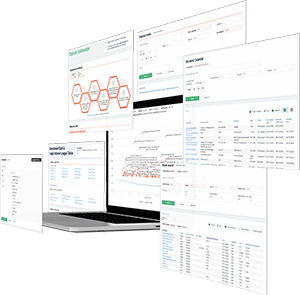

full data on over 900 000 bonds, 80 000 stocks, 116 000 ETF & Funds; powerful bond screener; over 350 pricing sources among stock exchanges & OTC market; ratings & financial reports; user-friendly interface; available anywhere via Website, Excel Add-in and Mobile app.
Register







 Bond Screener
Macedonia: EU gives a nod
Macedonia has embarked upon comprehensive structural reforms this year to
raise its economic potential, which has been marred by the neglected labour
market and regulatory inefficiencies. While the IMF oversees the structural
reforms, the EU has offered it candidate status. These may now drive the
process of political stabilisation. The reforms aim to triple the country\'s
GDP growth, strengthen the stability of the currency peg and introduce the
sovereign to the international debt market.
ECONOMIC OVERVIEW: The European Commission has assessed Macedonia\'s
political institutions and macroeconomic stability as suitable and
recommended it for EU candidate status. This should invigorate the reform
process in Macedonia as well as in the Western Balkans and promote political
stabilisation.
Macedonia has accomplished a successful macroeconomic stabilisation. The
major pitfall has been a neglect of structural inefficiencies, which
inflicted negatively on the country\'s competitiveness and growth. However,
the government has now decisively committed itself to a three-year IMF
stand-by agreement and a package of comprehensive reforms.
The program intends to boost the investment climate and restore
competitiveness, invite FDI. In the meanwhile, reserves will be built
through large-ticket privatisations, to reduce the vulnerability of the
exchange rate peg, which served the country well as a nominal anchor,
cutting inflation to near zero.
THE MARKET: The tradable sovereign debt market is underdeveloped
(EUR~0.3bn). The government\'s capacity to switch to the market for financing
is being established; by developing a liquid secondary T-bill market,
extending the 3M-2Y debt curve to 3-5Y and making an introductory eurobond
issue. Macedonia\'s foreign currency rating (BB+) compares well with the peer
group in its fiscal strength, new reform initiatives and likely EU
candidacy. Risks lie with the enduring regional political and ethnic
divides.