









Explore the most comprehensive database
1 000 000
bonds
80 234
stocks
167 970
ETF & Funds
70 000
indices
Track your portfolio in the most efficient way

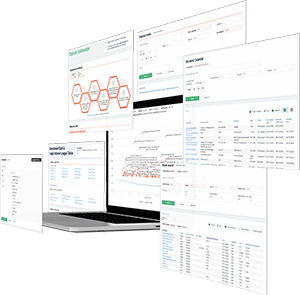

full data on over 900 000 bonds, 80 000 stocks, 116 000 ETF & Funds; powerful bond screener; over 350 pricing sources among stock exchanges & OTC market; ratings & financial reports; user-friendly interface; available anywhere via Website, Excel Add-in and Mobile app.
Register








 Bond Screener
LatAm Daily Update
Mexico (=)
The peso is likely to continue moving to the tune of global market gyrations, with all eyes on Greece. The peso reacted in line with LatAm fx markets, which, in spite of volatility episodes, still fared better than those EM markets that have closer connections to Greece. The peso closed at USD-MXN 15.69 on Monday, a c. 0.8% loss vs the USD.
From a domestic perspective, local data should be on the backburner during the week, with the IMEF manufacturing index for June likely to capture attention given its importance in predicting manufacturing activity (automobile assembly in particular) and export performance. This indicator is due on Wednesday.
Brazil (=)
The BRL on Monday ignored the global market volatility stemming from the Greek situation, outperforming most EM and regional fx peers and closing at USD-BRL 3.12, which is c. 0.4% stronger vs the USD. While Brazil doesn’t have significant trade or financial links with Greece, the current complex situation that Brazil finds itself in from a macro imbalances perspective could still cast doubts on its ability to withstand bouts of global volatility without further complicating its domestic situation.
Separately, the weekly central bank survey published yesterday shows that market participants now expect inflation to end the year at 9%, much higher than a month ago when expectations oscillated around 8.39%. Inflation forecasts for 2016 (year-end) remain stable at 5.50%. USD-BRL estimates for 2015 remain stable at 3.20, while year-end levels for 2016 declined marginally to USD-BRL 3.37 from the previous week’s survey but are up from a month ago, when this estimate hovered in the 3.30 area.
This forecast revision to inflation was somewhat expected after the central bank sounded hawkish in its June inflation report and still signalled that there could be inflationary pressures from regulated prices. On top of this outlook, the possibility of seeing a weaker BRL in the next months and possibly quarters still puts a cautious tone on tradable good items, with food prices being one of the main concerns.
Colombia (=)
The current account for the first quarter of 2015 is due today. We expect to see a deficit in the $6.05bn area. While this number is still weak in general terms, there should be an improvement on the last quarter of 2014. While Colombia is still undergoing a negative terms-of-trade shock due to lower oil prices, the price of the Vasconia oil blend (Colombia’s oil) has partially recovered and thus has somewhat improved export performance – but in general terms is still far away from the levels seen a year ago. In addition, private consumption is now showing signs of moderation and should help curb import growth in the months to come.