









Explore the most comprehensive database
1 000 000
bonds
80 234
stocks
167 970
ETF & Funds
70 000
indices
Track your portfolio in the most efficient way

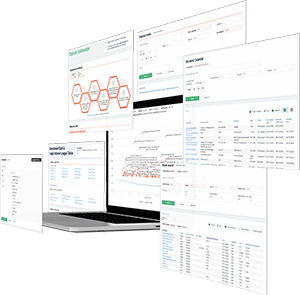

full data on over 900 000 bonds, 80 000 stocks, 116 000 ETF & Funds; powerful bond screener; over 350 pricing sources among stock exchanges & OTC market; ratings & financial reports; user-friendly interface; available anywhere via Website, Excel Add-in and Mobile app.
Register








 Bond Screener
LatAm Daily Update
Mexico (+)
The Mexican peso appreciated by c. 0.5% vs the USD to USD-MXN 15.6294 by the end of the trading session. The peso traded with a better tone yesterday as electoral noise is slowly dissipating. Preliminary election results do not differ significantly from what polls suggested last week. In this sense, it’s worth mentioning that there’s a good chance that the PRI (president’s party) will retain the majority of seats in congress when its allied parties are brought into the calculations. In addition, the election day (Sunday) evolved amid only scattered incidents that didn’t derail the polling process in the overwhelming majority of municipalities where strong protests had been seen in the previous days. That said, we expect the peso to trade more in line with global trends rather than responding to local developments.
Brazil (=)
The Brazilian central bank weekly economists’ survey contained interesting information with respect to market expectations of where they see the Selic rate by year-end in 2015 and 2016. For 2015, the survey shows (for the last two weeks) that Selic is expected to close the year at 14%, as the central bank language in its last communiqué failed to signal the end of the tightening cycle and as inflation performance continues to suggest that Bacen (CB) should continue its work to curb inflation. In this edition of the survey, economists see Selic at 12% by the end of 2016, which is 37bp more than the previous two weeks. With respect to inflation, the survey now suggests that IPCA (consumer CPI) is expected to close the year at 8.46%, which is still largely misaligned to the upper limit of the inflation tolerance band at 6.5% and, needless to say, to the centre of the inflation target band at 4.5%, thus showing the magnitude of the effort (fiscal mostly but also monetary) that Brazil needs to undertake in order to bring this variable under control, most likely by the end of 2016.
Colombia (=)
The Colombian central bank released the minutes from its last rate setting meeting when it kept the O/N rate at 4.5% as widely expected. This report didn’t bring significant changes with respect to monetary policy in the next months or a change in view of inflation trends. In spite of that, BanRep does mention again the current account deficit as an item to watch in the next quarters. We believe that BanRep’s intentions here are to create a deceleration in private consumption and at the same time allow the exchange rate (COP) to weaken to help external accounts. We think that BanRep is likely to pursue this strategy until the CA is at more sustainable levels, which we think is c. 3% of GDP. That said, we expect BanRep to keep the O/N rate unchanged to promote these adjustments, assuming of course that there are no external market disruptions to derail this objective.