









Explore the most comprehensive database
1 000 000
bonds
80 234
stocks
167 970
ETF & Funds
70 000
indices
Track your portfolio in the most efficient way

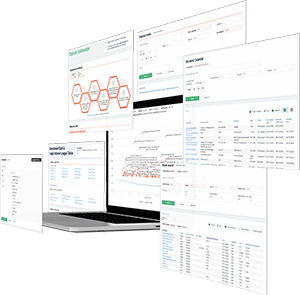

full data on over 900 000 bonds, 80 000 stocks, 116 000 ETF & Funds; powerful bond screener; over 350 pricing sources among stock exchanges & OTC market; ratings & financial reports; user-friendly interface; available anywhere via Website, Excel Add-in and Mobile app.
Register








 Bond Screener
LatAm Daily Update
Brazil (-)
USD-BRL is now trying to test the psychological 3.00 level after a few days of appreciation prompted by worse-than-expected US economic data. This data slump created market expectations of a potentially delayed start of the tightening cycle in the US that might not happen until September and this is spilling over positively into LatAm FX. In spite of these recent “good days” for BRL, we think that Brazil’s macro policy adjustment requires a weaker BRL to help close external account imbalances. Separately, the central bank may see this stronger BRL as an opportunity to limit the amount of FX swaps to roll-over in the next weeks. This action itself, in general terms, will make existing USD hedges more scarce and thus one more reason to envision a weaker real in the months to come that will likely intensify once expectations of higher rates in the US come back to the table.
Separately, IPCA 15 inflation for April was slightly higher than expected posting a 1.07% MoM acceleration (consensus at 1.02% MoM). Inflation is now consistently above the 8% hurdle at 8.22% YoY to be exact. Looking at the breakdown of inflation by categories, we can still see pressure from the non-tradable side as well as housing, which posted the largest MoM increase at 3.66%, followed by food and beverages that posted an increase of 1.04% MoM.
At this juncture, the next COPOM will certainly be an event of great importance not only because of the monetary action they might take (markets expects a 50bp hike on 29 April) but rather because of the message that COPOM might send. Growth continues with a sub-par trajectory and is likely to continue to do so throughout the year and post a contraction during 2015 of around 1.5% according to our estimates. The problem here is that labour markets are still supporting demand-side pressures that are evident in non-tradable items, thus making the ongoing inflation fight a very complicated balancing act.
Chile (=)
The Chilean central bank left the O/N rate unchanged at 3.0%, as expected. The communique that followed the rate decision seems to be relatively neutral in terms of any imminent rate action, In spite of this, the text towards the end of the document mentions explicitly how the central bank seems worried about the inflation trajectory by calling it still “elevated”. The very last paragraph seems to place a lot of flexibility in any future actions although the time frame to move ahead with any action is not clear. We have another complicated “balancing act” here as well as Chile’s economy is still sputtering and still posting inconsistent signs of stabilisation. The fact that gross fixed investment is still slow hints to us that growth may stay at low levels for several quarters. Following the mining sector’s gross fixed capital formation should give us a good idea of what to expect for the future for this indicator.