









Explore the most comprehensive database
1 000 000
bonds
80 234
stocks
167 970
ETF & Funds
70 000
indices
Track your portfolio in the most efficient way

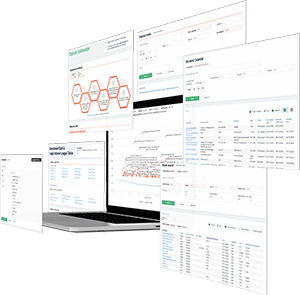
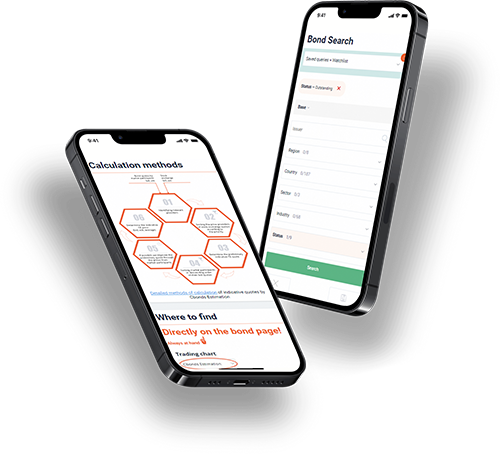
full data on over 900 000 bonds, 80 000 stocks, 116 000 ETF & Funds; powerful bond screener; over 350 pricing sources among stock exchanges & OTC market; ratings & financial reports; user-friendly interface; available anywhere via Website, Excel Add-in and Mobile app.
Register








 Bond Screener
EMEA Daily Update
Wrap up
- Oil price action has always been one to surprise everyone and also almost impossible to predict. The change in supply is nothing new and already happened in the past year - and, global growth is expected to stabilise in 2015. So, given we are now here with the oil price and expectations are now clearly biased on the downside, what does this mean for positioning? The attached charts highlight again clearly who are going to benefit the most (Turkey, followed by India, Indonesia, Hungary) and who will be hit the most - as we know, Russia stands at the top of the list, as does Venezuela (not in the chart), followed by the likes of Colombia etc.
- Russia clearly has more resources available to deal with this situation than Venezuela, which will increasingly appear on the map as a very vulnerable story (with oil prices at this level, a current account deficit of anywhere up to USD 10bn is possible in 2015 although difficult to pin down, given the lack of up to date data). The question remains what the CBR does now? - after telling the market for some time now that it will intervene meaningfully if volatility increases and the RUB deviates, a no-intervention approach would just see the RUB drift further.
- Indeed, volatility is now close to record levels and domestic sentiment must also have been damaged by the strong drop in oil prices, the one trump that Russia had in its hands. And, while fair value has also obviously increased to probably around USD/RUB 43-44 levels the overshooting that we have seen in the RUB is way further than what the central bank should be permitting if it wants to manage expectations.
- Bottom line: We hold on to our recommendations for the time being, in line with our adjustments made a few weeks ago. The one big challenge obviously remains Russia local currency, but we havent lost faith in our expectation of CBR re-action.
Turkey (-)
- Nov MPC minutes turned out to be less dovish than we had anticipated, with CBT remarking that still elevated inflation was hurting medium-term inflation expectations, and that this presents fresh risks for pricing behaviour; this is the main risk keeping the CB from cutting rates at present. The mins retained past guidance that the CenBank will maintain tight monetary policy and a flat yield curve until a noticeable decline in inflation had occurred. CBT also warned that food inflation accelerated through Nov as well (food inflation is the primary obstacle for headline CPI inflation to moderate).
For the medium-term, the council maintains that inflation will moderate steadily during 2015 to reach 6.1% by year-end. Overall, the still cautious stance boosts CBT credibility at the margin, and is lira-positive. Even when the CBT cuts rates later in 2015, it will be on the back of improving fundamentals, and the lira-positive environment will endure through 2015, in our view.
- In its latest Financial Stability Report, CBT sees the stability of local institutions as having improved over the past half-year, in particular as market interest rates have eased lower and lira volatility has receded. External and geo-political factors, however, have worked against market conditions and stability over this period. In this context, CBT cites its own stress tests which throw up limited sensitivity of large local banks to interest rate and global liquidity shocks; CBT reminds us that this result is also borne out in real life by the banking sector's performance through last year's EM volatility.
- As far as the corporate sector is concerned, financial liabilities have increased as percentage of GDP (the CB is referring to rapid loan growth here), but as much of the increase came from TRY-denominated loans, systemic risk has not increased much.
- On the risk side, CBT identifies increasing non-deposit funding as a major emerging risk; this is a reason why CBT decided to pay differentiated interest on lira required reserves; CBT signals that future measures to improve the maturity structure of non-core liabilities in the system will be taken using policy tools such as RRR and ROM (reserve options mechanism).
- Separately, consumer confidence fell further by 1.6pts in Nov, possibly on reports of a worsening unemployment situation (the unemployment rate is up from 9.2% in Jun to 10.4% now on a slowing economy); and possibly also because gas and electricity tariffs were recently raised by 9%. Still sluggish situation with economic momentum.
Hungary (=)
- The unemployment rate (LFS methodology) declined sharply in Oct by 2.7pps yoy to 7.1%, driven mainly by public work schemes. Youth unemployment fell by a sharper 7.3pps. As we have pointed out recently, public work programmes have added a significant number of jobs during 2014, albeit at low wage rates; such schemes will be increased 15%-20% by the govt in 2015.