









Explore the most comprehensive database
1 000 000
bonds
80 234
stocks
167 970
ETF & Funds
70 000
indices
Track your portfolio in the most efficient way

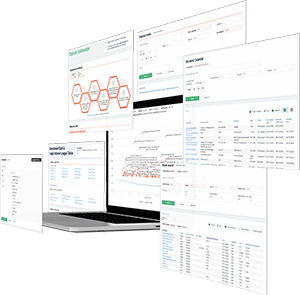

full data on over 900 000 bonds, 80 000 stocks, 116 000 ETF & Funds; powerful bond screener; over 350 pricing sources among stock exchanges & OTC market; ratings & financial reports; user-friendly interface; available anywhere via Website, Excel Add-in and Mobile app.
Register








 Bond Screener
EMEA Daily Update
Czech Republic (=)
- Bank lending growth slowed down to 3.2%YoY in Aug (vs. 3.8% in Jul), driven mainly by decelerating corporate borrowing (household borrowing stable at 3.6%YoY); this highlights cyclical risk to the economy as the EU cycle is softening and German growth expectations are being adjusted down.
Poland (=)
- The govt announced to the media that foreign investors, who had reduced their holdings of local Polish bonds by PLN 3bn in Aug, had added back significantly during Sept (final data not yet available for Sept). This could be moot now, if the risk off market environment were to intensify, but nevertheless it is useful guidance.
- The govt also announced that gross borrowing will rise to PLN 154.8bn next year (2014: latest est PLN 126.8bn), and that the treasury will pre-finance 25% of this during Q4 2014 (same as last year). This year’s borrowing plan is finished.
Hungary (=)
- Govt officials clarified yesterday that the plan for next year is to convert FX mortgage loans (and unrestricted-usage FX loans) into forint. The plan does not include some other types of loans, nor retail FX bonds held by households etc.; so, not the entire external debt stock of the household sector. The govt also confirmed that the conversion exchange rate and other details had not yet been finalised (we do not think these details will be decided upon until Q1 2015), but that the exchange rate would likely be near the market rate in order to preserve financial stability.
- We are still in the first phase of the FX borrower relief programme, which will go on until Q1 2015 (this phase deals with banks compensating customers for unfair charges); the second phase will follow in early H2 2015, and that is when this debt conversion will be carried out. Since, the exchange rate that will be used for the conversion will have to be close to the spot exchange rate, this cannot be decided now; nor should be a big issue as the CB has announced a detailed plan about how it will support the conversion using its own FX reserves (see our Daily of 25 Sept).
- Hungary's public debt (including councils) stood at a consolidated 85% of GDP as of end-H1 (up from 84.5% at end-Q1). We know that public debt has risen sharply this H1 because the govt carried out front-loaded borrowing (as markets were favourable); for the remainder of the year, negative net issuance is planned (except to the extent that the govt decides to pre-finance 2015 if yields remain supportive). Hence, debt/GDP is projected to decline by this year-end, and more noticeably by next year-end.
Turkey (-)
- The lira is under a fresh weakening spell; we sense more pressure in coming weeks as global markets remain volatile and shy away from risk. Turkey's own inflation and current-account fundamentals are not helping either: Turkey enjoyed good current-account re-balancing over the past year, but this trend is coming to an end. This change was confirmed by the August trade data (released yesterday): the monthly trade-deficit came in much worse-than-expected at $8bn (consensus: $6.7bn), and crucially, worse than the $7bn deficit a year ago (an important reversal of a year on year improving trend).
- The Aug deficit widening was driven by 7%YoY import growth and an anaemic 2.9% export growth (3%YoY export decline once the data are calendar-adjusted). Exports to Europe was still the fastest growing, up by 10%, but this is beside the point.
We expect some modest trade-balance improvement again in Sept-Oct, but the rapid pace of improvement that we witnessed over the past year is likely over; and this is bad news for the lira and for CBT policy.
- CBT has already begun to carry out implicit intervention by selling dollars at FX auctions and offering part of its funding for the banking sector at the higher 10.75% overnight lending rate (as opposed to the usual 8.25% repo rate). Such measures are aimed at combatting speculative excess, but they are typically not very effective at reversing a lira spike fully until the risk mood has changed of its own.
- The govt has announced that it will hike gas and electricity prices (by about 9%) next month; this follows a period of unchanged prices beginning Oct 2012 during which the govt held utility prices unchanged (despite rising international prices), as elections were coming up. The price freeze had begun to hit state gas supplier BOTAS' financial viability in a major way, and the weakening lira now increases energy import costs and hence, increases the strain on the Budget. The planned price increase will add 0.2pp to headline CPI inflation compared with existing projections.