









Explore the most comprehensive database
1 000 000
bonds
80 234
stocks
167 970
ETF & Funds
70 000
indices
Track your portfolio in the most efficient way

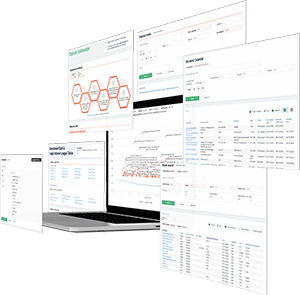

full data on over 900 000 bonds, 80 000 stocks, 116 000 ETF & Funds; powerful bond screener; over 350 pricing sources among stock exchanges & OTC market; ratings & financial reports; user-friendly interface; available anywhere via Website, Excel Add-in and Mobile app.
Register








 Bond Screener
EMEA Daily Update
Wrapup
• While EM FX are busy dealing with the recent bout of UST yield upside, the fragile ceasefire in eastern Ukraine seems to be holding, although there are continued reports of sporadic firing/shelling and Luhansk rebels saying they see a risk that the ceasefire won't last. If the ceasefire fails to hold we would not be surprised to see a strong move on the sanctions front in the coming weeks out of the EU/US, and continued NATO "re-action".
• EU ambassadors meet today to decide the fate of the next stage of sanctions. Hopefully they will hold back for the time being as the sanctions should be seen as an integral part of the ceasefire process (from a psychological point of view) and this planned stage would do very little to increase economic pressure on Russia. Otherwise, the Dutch investigation into the MH 17 crash has shown initial findings that it was indeed an outside source (high velocity impacts into the plane at various places) that caused the disaster.
• In our view, the two major aspects that have to be addressed urgently are the creation of a peace-keeping force (a multilateral UN force would obviously be the best) and heightened communication at all levels between the EU/US and Russia, however formal or informal they may be. Without the dialogue, that was extensive at the time of the cold war, positions will get increasingly stubborn and precarious. Former Japanese PM Mori is apparently set to visit President Putin with a letter from PM Abe...
• Finally, there is now talk of trilateral gas talks on 16 Sep between Russia/Ukraine/EU. That will clearly need adjustment in Ukraine's position on a gas price similar to what most of the EU pays (sub USD 400 levels).
Czech Republic (=)
• CPI inflation surprisingly accelerated to 0.6% vs. 0.5% expected, driven by higher-than-anticipated food prices (which are turning less deflationary). This does not yet mean, however, that CNB's FX intervention is successful in restoring inflation in the economy to the contrary, latest import price and service sector price data suggest that deflation is still being imported from the EZ; Czech wage growth, too, has begun to moderate (after showing initial promise in Q1).
Poland (=)
• PM Tusks govt resigned last eve as had been anticipated: Pres Komorowski will formally accept the resignation on Thurs and then designate a new PM by 25 Sep (widely expected to be Sejm speaker, Ewa Kopacz, as per Tusks succession plan. This stage of the transition is still being driven by Tusk, and is expected to go seamlessly, with full policy continuity until autumns general elections (except that the media increasingly speculates about whether or not FinMin Szczurek will remain in place). It is the next stage (performance in elections and thereafter) where there will be huge question marks following Tusks departure from domestic politics.
• Meanwhile, more dovish rhetoric out of the MPC: board member, Osiatynski, joined member Chojna-Duch in calling for a larger than 25bps rate cut step in Oct.
Turkey (=)
• Q2 GDP data out this morning will likely show noticeable slowdown to c.2.5%YoY from Q1's 4.3%; this is now more or less discounted as IP data signalled this early; in Q3, however, we anticipate a modest re-acceleration back towards 3% growth (our full-year forecast is 3% growth, with potential for upside).
• Retail sales (ex autos) up 2.3%YoY (in real terms) in Jul (Jun: 5.2%); non-food sales up a punchy 6.1%. Difficult to read because of Ramadan volatility and seasonal adjustments. But, outlook improving in general: retail sector turnover is growing at 10%-plus; in Aug, retail sector confidence improved further.
• Car industry association also reported punchy 21%YoY jump in car production during Aug.
• Local media reported yesterday that Turkish officials met with US counterparts to discuss a US-led military offensive against ISIL in Iraq, but expressed reservation about its own military involvement; Turkish ForeignMin Cavusoglu held that Turkey will, of course, continue to play its role as per NATO obligations, and will also provide any non-military support.
Croatia (=)
• While the country still observes a trade deficit, it fell by almost 7%YoY in H1 due to a 13%YoY surge in exports, again a result of some stabilisation out of the Eurozone and low base effects. Yet another example of why we need to see the situation in Ukraine calm down (Croatia has asked the EU for assistance, given the loss of exports to Russia, which has also hit other CEE countries, foremost Poland).
Romania (=)
• Parliament finalised the approval of the 5%point cut in employer social security contributions as of Q4, which had been sent back by the president and opposed by IFIs. We do see this as a positive impulse for the economy, which should face some counter-balancing from other budget revs. With a gradual economic recovery (July trade deficit also provided some relief, lower by 9%YoY) why not go for it now, as debt/GDP is not exactly Romania's biggest worry? IFI consent, although reluctant, would likely follow in our view.
Serbia (=)
• Rather lacklustre bidding at yesterday's 7yr bond auction, which came in at around half of the RSD 15bn on offer, although the yield achieved was similar to the 1 July auction, at 11.79%. Although not a full benchmark, the results probably reflect the recent RSD weakness, which we see as overdone.
Israel (=)
• The Shekel has reacted sharply over the past month (5% weaker vs. late-July) as the MPC mins and other CB remarks have hinted at unconventional policies being considered at this time (FX intervention and bond purchases the most likely candidates); Gaza tension obviously playing a (helpful for the CB) role too. The sharpness of the move in recent weeks makes this important to watch.
• FinMin Lapid remarked yesterday that the shekel remains too strong, even after this bout of weakening; he reckons the optimum exchange rate to be 3.7-3.8 (vs USD).