









Explore the most comprehensive database
1 000 000
bonds
80 234
stocks
167 970
ETF & Funds
70 000
indices
Track your portfolio in the most efficient way

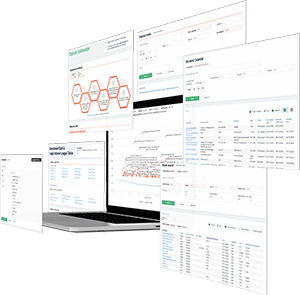

full data on over 900 000 bonds, 80 000 stocks, 116 000 ETF & Funds; powerful bond screener; over 350 pricing sources among stock exchanges & OTC market; ratings & financial reports; user-friendly interface; available anywhere via Website, Excel Add-in and Mobile app.
Register








 Bond Screener
Russian Fixed Income Daily
- Yakutia-5 downgraded to Sell, Buy for IrkutskReg maintained
- FSK UES reaches our target 7.15%...
FX and money market
Yesterday, Russian companies paid their profit tax causing a shortage of rouble liquidity, spiking the overnight rate to 5 %. Taking into account seasonal effects related to the end of the month and recent huge tax payments, today and probably tomorrow we do not rule out a liquidity gap in the money market. However, from the beginning of September interest rates will return to their regular level. For the FX side, the majority of coming exports proceeds were spent on the above mentioned payments and, as a result, upward pressure on the rouble took place – it was bounded at RBL/US$28.43-28.46. On the other hand, close to the evening the euro lost its position against the dollar falling to US$/EUR1.226 and consequently the rouble dropped to RBL/US$28.483. Today the euro is continuing to slide and we can see a weakening of the rouble to RBL/US$28.51-28.55.
Olga Golub, Moscow (7 095) 755 5176
Rouble bond market
Monday is usually the slowest day of the week, so trading activity on the local debt market was quite limited. This was especially evident in the government sector, while corporate securities demonstrated moderate, but notable exchange turnover. In spite of this slowdown, the market managed to grow marginally yesterday, which was even surprising, considering the jump in short-term rouble rates that was expected to diminish demand. This market strength in hard conditions supports us in our opinion that further price appreciation in the first half of September is very likely.
Profit tax payment – the last liquidity drain in August – reduced the money supply to the financial system yesterday taking 1-day MIBOR as high as 5.22%, which was its highest level this month. As there will be no more tax payments in the next couple of weeks, we expect the money market to quickly return to its ‘normal’ state, as a result of which MIBOR should drop to about 2% in the first days of September.
US Treasuries were moving very slowly yesterday having slightly corrected downwards: US10Y moved in yield from 4.14% in the morning to 4.16% now. Nevertheless, we believe that American bonds are presently in an upward movement that is expected to take US10Y to level 4% in the first half of next month. It should be noted, however, that this Friday an August job report will be published in the States, and that can significantly influence the dynamics of US Treasuries in any direction, being the major source of uncertainty this week.
Russia’30 is currently at its historical high, being quoted 112.5/113. Its spread over US10Y is basically the same 133bp, so if US10Y reaches 4%, Russia’30 will be traded at 114.
Municipal bonds
Price changes for most liquidly traded bonds in the secondary market: Moscow-39 +19bp, MosReg-5 -2bp, Yakutia-5 +46bp.
As shown, Yakutia-5 (B+ from Fitch) grew 46bp yesterday reducing its YTM from 7.92 to 7.59%. Our target for it was located at 7.75%, so over a day it was not only reached, but significantly surpassed. Taking this into account, we recommend selling Yakutia-5 with an idea of switching into longer bonds, e.g. Moscow-39.
The latter grew yesterday 19bp and was trading at 7.75%. However, its spread over OFZ 46014 still remains close to 35bp – largest since January 2005. Therefore, we maintain our Buy recommendation regarding Moscow-39 with YTM target 7.6%, which now promises further price upside of 95bp.
The dramatic performance of Yakutia-5 makes us believe our Buy recommendation for IrkutskReg (B from S&P) can also perform quite well. The bond is now yielding 7.84% to maturity in 2 years, and we believe it remains attractive as a mid-term vehicle above 7.75%.
Corporate sector
Price changes of corporate benchmarks in secondary trading: Gazprom-4 +2bp, Lukoil +0bp, FSK UES +8bp. Second-tier bonds: Megafon-3 +25bp, Rosbank +3bp, UrSi-4 -6bp, CenTel-4 +16bp, ChTPZ +0bp.
As indicated, FSK UES grew yesterday 8bp and was trading at YTM 7.15%, which is exactly our target set previously for the bond. The paper has ceased looking cheap now, so we are downgrading it to Hold. FSK UES has a potential to reach level 7% in the immediate future, but this upside is now less certain.
In the second-tier segment we are maintaining two active Buy recommendations: regarding ChTPZ, which was yesterday trading at 8.66% to put in 3 years, while our target for the bond is currently located at 8.4%, and also for Pyaterochka, with a YTM target 8.75%. We believe that the latter should trade at a discount to CenTel-4, which is now yielding 8.98% to maturity in 5 years.
Short term market view
Our general recommendation for long rouble bonds was changed yesterday from Hold to Buy. We believe it is time now to start increasing the overall portfolio duration, as paper deficit and low money market rates are likely to result in another wave of market growth in the first half of September.
Dmitry Dudkin, Moscow (7 095) 755 5480
Further debt pre-payments
The MoF intensifies negotiations on pre-payment of non-Paris Club debt of the former USSR of US$6.1bn
Russia wants to continue pre-paying its foreign debt to sovereign creditors, not included in the Paris Club. In 2000, this debt amounted to US$19.8bn and significantly dropped to US$6.2bn now on the back of bilateral negotiations and pre-payments (Russia’s main creditors of this part of the debt are South Korea (US$1.3bn); the UAE and Kuwait (US$0.8bn)). The Finance Minister Alexey Kudrin announced that Russia could pre-pay this debt in full. Although the MinFin said nothing about timing, we believe that it could be done by the end of 2005 as bilateral negotiations intensify after Russia reached agreement with the Paris Club in 1H05. In addition, Russia would like to pre-pay so-called “loans from foreign banks and firms” – relating to London and Tokyo Clubs. Russia estimates this debt at US$2.2bn. However, taking into account experience with the FTO debt, the process of verification is unlikely to be easy, increasing uncertainty of the negotiation process related to this debt.
Investment implications: Solid fiscal performance (budget surplus is unlikely to be lower than 5% of GDP in 2005) and the high stabilisation fund accumulation strongly stimulates Russia for further pre-payments of its foreign debt. We welcome this idea and believe the pre-payment of non-Paris Club debt is realistic in 2005. Pre-payments will help to reduce the debt burden below 17% of GDP, thus reducing the inflationary consequences of high oil prices and assure purposeful spending of the stabilisation fund.
Julia Tsepliaeva, Moscow (7 095) 755 5489