









Explore the most comprehensive database
1 000 000
bonds
80 234
stocks
167 970
ETF & Funds
70 000
indices
Track your portfolio in the most efficient way

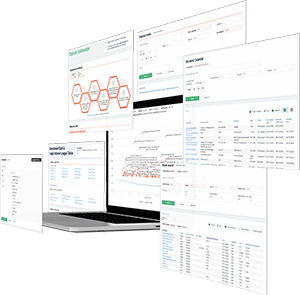
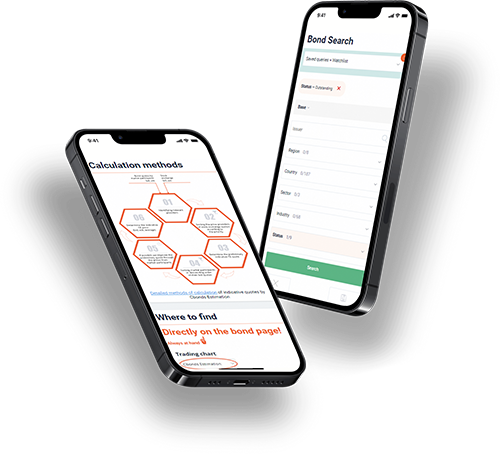
full data on over 900 000 bonds, 80 000 stocks, 116 000 ETF & Funds; powerful bond screener; over 350 pricing sources among stock exchanges & OTC market; ratings & financial reports; user-friendly interface; available anywhere via Website, Excel Add-in and Mobile app.
Register






 Bond Screener
Russian Fixed Income Daily
- Recommendation for long bonds changed to Buy from Hold
- Moscow-39 - the most attractive among munis
- Target for ChTPZ - 8.4%, Pyaterochka - 8.75%...
FX and money market
Last week following the euro/dollar exchange rate the rouble was rather volatile with intraday fluctuations +/-5-12 kopecks and on Friday it reached RBL/US$28.45. In addition, problems with rouble liquidity caused by the huge tax payments, plus the end of month factor, created pressure for the rouble. The excess of rouble funds seen in the market at the beginning of the week were absorbed by the tax payments which pushed the overnight interest rate to 8-10% in the second half of the week. Today Russian companies will be paying profit tax (some RBL150 bn), the last tax payment this month and as a result, we expect money market conditions to still be tense. But from tomorrow the tax payment schedule is clean until mid-September. In the FX market, the rouble will be linked to the euro trend this week and today we see it in the range of RBL/US$28.41-28.46.
Olga Golub, Moscow (7 095) 755 5176
Rouble bond market
Due to problems with rouble liquidity, Friday, usually the strongest day in a week, turned out to be flat in price action and relatively slow in trading activity. All market sectors demonstrated no clear tendency with relatively small price changes.
Because of the large tax payments last week and in anticipation of the profit tax payment today, money market dealers kept interbank rates high with 1-day MIBOR being now at 4.3% - approximately twice as higher as its ‘normal’ level usually observed at times of adequate liquidity. After today’s tax payment the market will not see significant liquidity drains until mid-September, which changes for our view for this primary driver of the local bond market for short-term positive.
US Treasuries on Friday made a downward correction attempt: having opened at 4.16%, US10Y reached the level 4.2% by the evening, but failed to fall further and by this morning returned to lower yields, trading now at 4.14%. As we already said, we believe US10Y is currently targeting level 4% and promises to reach it in the first half of September. After that, further movement direction will depend on if the benchmark is able to break the upward sloping trendline support (on the yield chart) that has been limiting 10-year yields from below since June 2003. Right now, this support is located at 3.88%.
Meanwhile, Russia’30 is floating strictly parallel to US10Y with a spread of 135-137bp. As the latter has been recently edging higher, Russia’30 has been establishing one historical high after another and should continue to do so in the immediate future, as we perceive the probability of the spread widening as very low. Right now the bond is quoted 112.375/8125. Our price target for Russia’30 is located at 114.
Municipal bonds
Price changes for most liquidly traded bonds in the secondary market: Moscow-39 -5bp, MosReg-5 -2bp, Yakutia-5 +4bp.
As shown, Yakutia-5 (B+ from Fitch) grew 4bp reducing its YTM to 7.92%. We believe the bond can do much more: our target for it is located at 7.75%, and the latter can be reached within the next couple of weeks.
Also, IrkutskReg (B from S&P) grew 14bp on Friday, having traded in yield as low as 7.94%. We also estimate the fair level for the bond at 7.75%, which promises a further price upside of 25bp.
Our main trading recommendation in the sector now is a Buy for Moscow-39. Right now the longest paper on the Moscow curve (9 years to maturity) is at YTM 7.78%, while our target for it is located at 7.6%, which constitutes a price growth potential of 110bp.
Corporate sector
Price changes of corporate benchmarks in secondary trading: Gazprom-4 -1bp, Lukoil -4bp, RZhD-3 -25bp. Second-tier bonds: Megafon-3 -10bp, Pyaterochka +33bp, Rosbank +3bp, UrSi-4 +5bp, CenTel-4 +35bp, ChTPZ +9bp.
FSK UES that we recommended as being for buying on Friday grew 28bp, descending in yield to maturity in 28 months from 7.32 to 7.19%. We believe the bond is looking attractive above level 7.1%, so we maintain a buy recommendation for it.
Among second-tier bonds, we specifically favour ChTPZ (Chelyabinsky Tube-Rolling Plant), which entered secondary trading only recently and is currently yielding 8.67% to 3-year put option. We believe the bond can lower its yield to 8.4% in short-term perspective, which provided a price upside potential of 65bp.
Also, we believe Pyaterochka is looking attractive at its current 9.15% to maturity in 5 years. By credit quality, it should definitely trade at a discount to its peer bond CenTel-4, which is currently yielding 9.03%. So, we locate our target for the YTM of Pyaterochka at 8.75%.
Short term market view
Today we are changing our general recommendation for long rouble bonds from Hold to Buy. We believe the market should benefit in the short term from improvement in money market rates, further growth in Russian Eurobonds and a significant paper deficit, as the local market pipeline is still almost empty.
Dmitry Dudkin, Moscow (7 095) 755 5480
Common Economic Space (CES): Russia, Kazakhstan, Belarus
Legal base for CES union will be fully created in December 2005 and March 2006
The leaders of CIS countries met in Kazan (Russia) last Friday to celebrate the city’s millennial anniversary and discuss further perspectives of this union. It is clear that the CIS has fully completed its main target – the avoidance of violence/civil war scenarios in the USSR post-disintegration period. Despite all of the positive rhetoric about the CIS’s future, the summit decided not to discus any concrete plans of the CIS reforming but to create the special non-governmental ”Council of Sages”, which means that it will continue to drive the organisation in the direction of cultural and humanitarian cooperation. Nevertheless, economic integration continues in the form of bilateral cooperation and creation of new units. The summit gave a new breath to the CES union. Recently, Ukraine has confirmed that the country is not ready for full integration with the union and only wants to participate in the free trade zone project, which increased uncertainty regarding the union in general. Now the situation has become clearer. Russia, Kazakhstan and Belarus have decided to continue integration in line with the initial plan while Ukraine will have the possibility of joining the union later if the country changes its views on the issue (nevertheless, we believe this is not very likely).. Russia, Kazakhstan and Belarus are planning to sign three packages of documents to establish a fully functioning union. The first package of 29 documents is going to be signed by the end of 2005. By 1 March 2006 the core 15 laws should be approved, leaving some 49 documents for 2006-07. The leaders of Belarus, Kazakhstan and Russia sound very optimistic about further prospects of full integration – however, without Ukraine the project has significantly lost its economic value. Nevertheless, we welcome all efforts towards new forms of integration in the former USSR and believe we will see some practical results (first of all, trade turnover increase) in 2006-07.
Investment implications: Despite the Ukraine’s decision to postpone (very likely, indefinitely) the participation in CES union, we welcome the efforts of Russia, Kazakhstan and Belarus to continue and intensify the integration process. We believe that positive impact on trade is possible already in 2006-07, which is good for economic growth in the region.
Julia Tsepliaeva, Moscow (7 095) 755 5489