









Explore the most comprehensive database
1 000 000
bonds
80 234
stocks
167 970
ETF & Funds
70 000
indices
Track your portfolio in the most efficient way

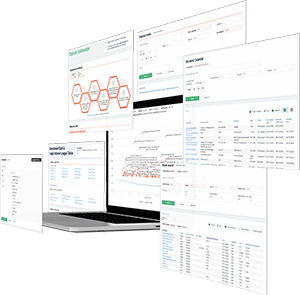

full data on over 900 000 bonds, 80 000 stocks, 116 000 ETF & Funds; powerful bond screener; over 350 pricing sources among stock exchanges & OTC market; ratings & financial reports; user-friendly interface; available anywhere via Website, Excel Add-in and Mobile app.
Register








 Bond Screener
EMEA Daily Update
• Against the backdrop of sideways but cautious market action in the region (Friday sees the next wave of possible ratings reviews, with PL, CRO, and TR in line and EconMin Zeybekci sceptical about Moody's review), yet another CEE CenBank cutting rates, with the NBR moving in line with consensus and lowering the benchmark yield to the 3.25% mark. With the ECB this "dovish" and inflation forecasts being cut everywhere in the region, we would except some more of the same: the NBP may be missing its window of opportunity, possibly in order to show "full" indpendence, following the Q2 taping "scandals" but we hold on to our expectations of more cuts as long as UST yields fail to jump meaningfully, while markets shouldn't be surprised if we see the NBH opening the door to one more cut …
• The US and African nations meet this week for a summit on promoting development, with some South African officials talking about a possible USD 100bn fund to be half financed by the US (even if far-fetched, a clear political message that Africa has seen a lot of Chinese infrastructural fund flows in the past decades and that the "west" is now facing an upping of the ante after so many continent-wide projects failed in the past). Indeed, probably the most important developmental impetus Africa could receive is a trans-continental transport and communications network, with partial private sector investments - South Africa could spear-head such an initiative if alone to promote employment within its own economy…
• Otherwise, it is good to see some positive econ vibes in the region, with: 1) The polish central bank loan survey showing private banks likely to ease lending conditions ahead for larger borrowers (econ perception at highest level since 2003), 2) Czech unemployment falling from 6.9% to 6.1% in Q2 and retail sales up a huge 8%YoY in June and 3) Croatian SeasAdj retail sales actually slightly in positive territory in June (part of the positive spillovers of the proximity to and membership of the EU, with more tourists from north of the borders)
• And, the Polish government must be having mixed feelings about the fact that "only" 10% of the 17mn or so members that the private pension funds (or OFEs) had in Q2 will be opting to see 2.92% of their monthly contributions continue to go to the OFEs. The govt originally expected a 50% take-up ratio and then revised that down to 20%. Short-term positive for the fiscal front (less yearly budget transfers to OFEs) but obviously an increase in contingent liabilities. A big question: 1) as to what happens to the private pension fund sector ahead (with capital transfers to the public sector 10yrs ahead of member retirements) and 2) what this implies for the rest of Europe (consensus had always been that private pension funding is the most efficient direction to go) - media is meanwhile talking about an extension of the delay in Russia of transfers to private pension funds
Bulgaria(=)
Media quoting the majority shareholder of CCB as saying that the bank is likely to face a bid from a consortium of investors. Markets have been taking a sanguine approach to the matter, but clearly the lack of cohesion on the authorities' side in dealing with the issue has meant that a "private sector" solution would be the best to sort out the situation and avoid any loss in confidence in the currency board system by depositors, which is the back-bone of the Bulgarian economy.
Hungary(=)
One NBH official re-iterating that HUF 160bn compensation payments will come from banks to customers on what the NBH calculates as the unfair FX-rate margins charged by banks. The upper limit estimate of HUF 900bn burden thus remains in place - there has been some FI/FX weakness in the past week in our view, due to a combination of 1) spillover from a switch of T-Bill to more bond funding, 2) the negative vibes from the banking sector fines and 3) talk of banking sector nationalisations. However, we see the authorities' rhetoric moving in the direction of "calming", with a corresponding re-action of yields to the downside (especially as the ECB picture has not changed)
Russia(=)
A relief to see July CPI falling to 7.5%YoY, a trend to likely continue in August as: 1) the RUB backdrop has calmed (probably on repatriation of some Russian funds), 2) utility price hikes have been milder than a year ago and 3) fruit&veg prices have been milder. Although solid harvests this year, similar to 2013, will prevent any real pressure on grains prices, the ban on different foodstuffs from abroad is likely to have kick-back effects on CPI in Russia.
South Africa(-)
Some former employees have seen the Pretoria High Court allowing a class action against Transnet and its pension funds on behalf of 60,000+ former employees, who have apparently faced payment shortfalls. Yet another issue for the government to deal with if found to be "successful"