





Chang Hwa Bank Bonds, 0% 17dec2034, USD (7305D) (FIGI BBG007QLHCP7, TW000F015045, WKN A1ZUER)
Domestic bonds, Zero-coupon bonds, Senior Unsecured
Cbonds consolidates global bond, stock, ETF and indices data into a single platform — so you can analyze faster, make informed investment decisions and outperform the market
Get accessBond parameters,
prospectuses
Analyze the data in the most efficient way
Current & historical quotes from 400+ stock exchanges & OTC market
Credit ratings, financial reports
Explore the most comprehensive database
1 000 000
bonds
80 234
stocks
167 970
ETF & Funds
70 000
indices
Track your portfolio in the most efficient way
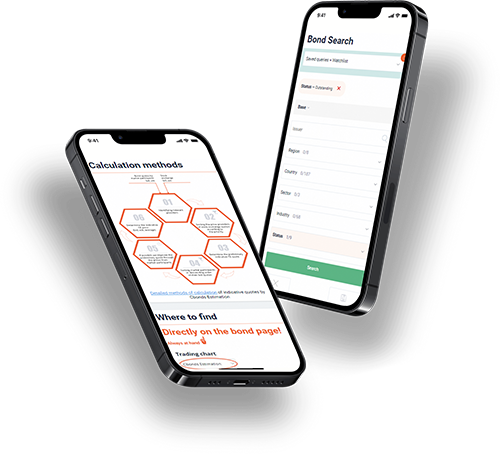
full data on over 900 000 bonds, 80 000 stocks, 116 000 ETF & Funds; powerful bond screener; over 350 pricing sources among stock exchanges & OTC market; ratings & financial reports; user-friendly interface; available anywhere via Website, Excel Add-in and Mobile app.
Register|
The origin of Chang Hwa Bank dates back to the colonial period under Japan’s governance when Wu Ju-Hsiang founded the Kabushiki Kaisha Shoka Ginko in Chang Hwa on June 5, 1905, with an initial capital ...
The origin of Chang Hwa Bank dates back to the colonial period under Japan’s governance when Wu Ju-Hsiang founded the Kabushiki Kaisha Shoka Ginko in Chang Hwa on June 5, 1905, with an initial capital of 220,000 Japanese yen raised from local businessmen and landlords.
Kabushiki Kaisha Shoka Ginko relocated its head office from Chang Hwa to Taichung in 1910 to better coordinate its expansion efforts of setting up branches and offices in all major cities in Taiwan.
After Taiwan was restored to the ROC government on October 25, 1945, the Bank's predecessor established a preparatory office to reorganize as today's Chang Hwa Bank. After the Taiwan provincial government took control of Japanese shareholdings in Kabushiki Kaisha Shoka Ginko, the preparatory office conducted the Bank's first shareholders' meeting in February 1947, which elected Chang Hwa Bank's first directors and supervisors under a new government. The new board elected the preparatory office's head Ling Hsien-Tang as the Bank's first chairman. Chang Hwa Bank was formally re-incorporated under ROC Law on March 1, 1947, with an initial capital of 15 million Taiwanese yuan.
In June 1949 the Taiwan provincial government replaced the Taiwanese yuan with the New Taiwan dollar. Chang Hwa Bank adjusted its registered capital accordingly to NT$2.4 million in December 1950. At the end of 2014, the Bank's registered-capital stood at NT$79,040,403,720. The Bank is one of the leading commercial banks in Taiwan in terms of paid-in capital and sound financial structure.
In December 1997, the Taiwan provincial government made public its shareholdings in the Bank in line with the government's policy of financial privatization. The Bank was officially privatized on January 1, 1998.
In Oct. 3, 2005, Taishin owning with 22.01% ownership replaces the government as CHB’s largest shareholder.
|
|
|
|
|
|
|
|
|
Explore the most comprehensive database
1 000 000
bonds
80 234
stocks
167 970
ETF & Funds
70 000
indices
Track your portfolio in the most efficient way
full data on over 900 000 bonds, 80 000 stocks, 116 000 ETF & Funds; powerful bond screener; over 350 pricing sources among stock exchanges & OTC market; ratings & financial reports; user-friendly interface; available anywhere via Website, Excel Add-in and Mobile app.
Register